How much does it cost to have someone host your website?
For most Australian businesses, the answer sits somewhere between cheap and deceptively expensive. A basic shared hosting plan might cost less than a couple of coffees a month. A managed setup for a serious WordPress site or online store can cost far more. Then there is the version of the question people often mean but do not ask directly: what does it cost to have someone host the website and actually take care of it properly?
That second version matters.
Because anyone can rent server space. The real cost changes when you need the site looked after, updated, backed up, secured, and kept stable while your business gets on with the day.
At Perth Digital Edge, we see this problem from the messy end, not the neat one. Usually, by the time someone asks us about hosting costs, they are already annoyed. The site is slow. Forms are flaky. The old host takes forever to reply. Or the business has outgrown a bargain hosting plan and the whole thing is starting to creak.
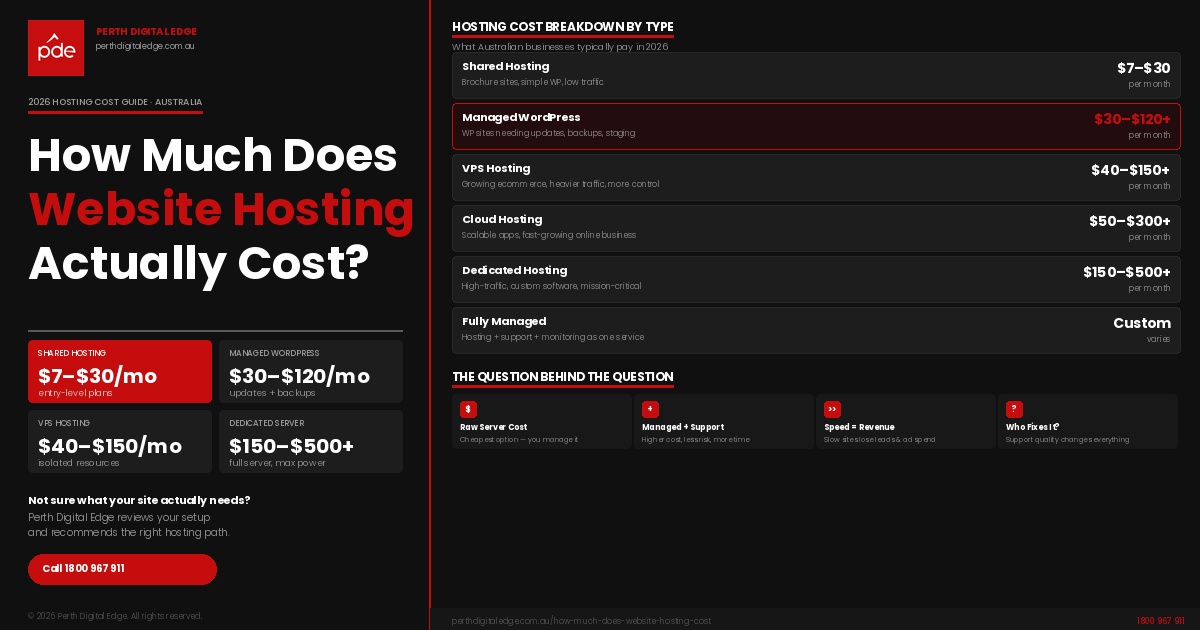
That is why the price range is wide. If you only want raw web hosting, you might expect to pay from around $7 to $30 per month for a shared hosting plan. Managed WordPress hosting often lands around $30 to $120+ per month. VPS hosting usually starts higher again. Dedicated hosting sits well above that. But once you add hands-on support, website backups, monitoring, updates, and real accountability, the number changes because the service changes too.
What You Are Really Paying For
Most people think web hosting is just rented space on a server. Technically, yes. Practically, not even close.
A hosting plan usually covers storage space, server resources, an operating system, bandwidth, some level of network security, and access to a control panel so someone can manage website files, databases, domains, emails, and other basics. Depending on the host, it may also include a free SSL certificate, a free domain, a free domain name for the first year, or a website builder.
That is the simple part.
The more important part is the hosting environment itself. Is it stable? Is it overloaded? Are multiple websites share arrangements cramming too many sites onto the same server? Are website backups actually reliable? If the site breaks after an update, is anyone there to fix it?
This is where website hosting costs start to make more sense. Cheap hosting can be fine. It can also be the most expensive thing in the room once it starts choking site performance, slowing down a campaign, or making a small problem feel like open-heart surgery.
Pricing Table For Website Hosting In Australia
Here is the practical version.
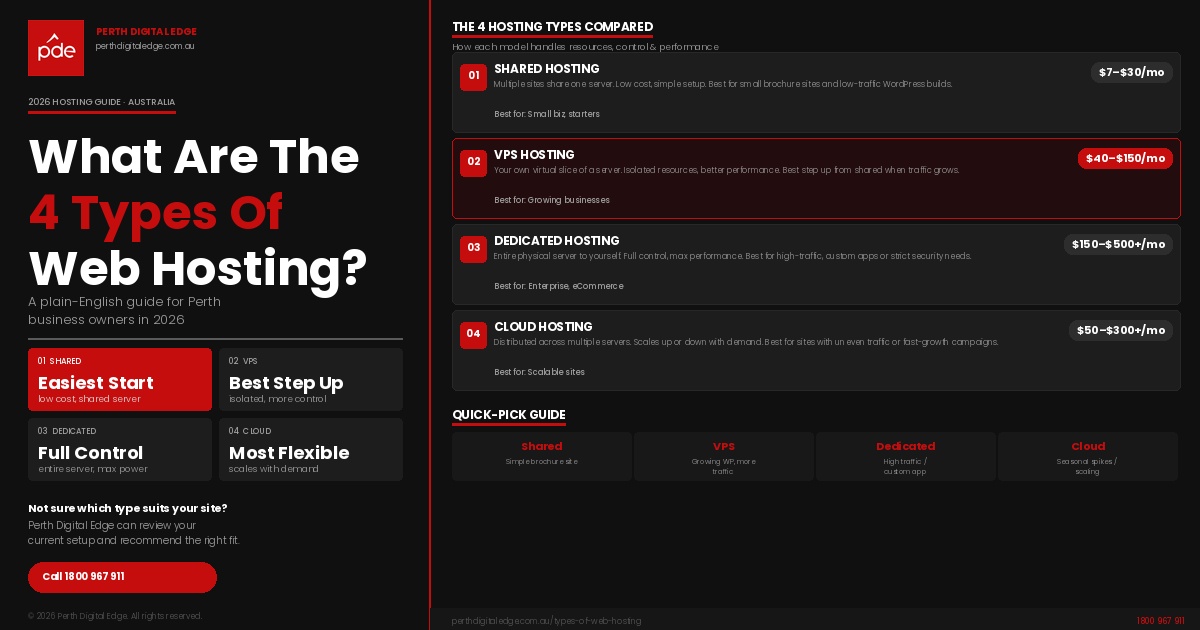
| Hosting Option | Typical Monthly Cost | Best For | Reality Check |
|---|---|---|---|
| Free Web Hosting Plans | $0 | Testing, hobby sites, short-term experiments | Useful for playing around, not for a real business |
| Shared Hosting | $7 to $30 | Small businesses, brochure sites, starter WordPress site | Low cost, but multiple websites share one server environment |
| Managed WordPress Hosting | $30 to $120+ | WordPress site owners who want less admin and better performance | More support, better website backups, stronger website performance |
| VPS Hosting | $40 to $150+ | Growing sites, ecommerce websites, heavier traffic | More isolated resources, more control, more responsibility |
| Cloud Hosting | $50 to $300+ | Scalable sites, apps, fast-growing online business | Flexible, but pricing can climb quickly |
| Dedicated Hosting | $150 to $500+ or more | High traffic, larger ecommerce sites, custom software | Entire server, dedicated resources, highest cost |
| Fully Managed Hosting | Varies | Businesses that want one team to host, maintain, and support the site | Usually the easiest option operationally, but not the cheapest |
That table is the tidy version. Real life is messier. Two businesses can pay the same monthly fee and have wildly different experiences depending on support quality, server setup, and whether anyone is actively looking after the site.
Why Shared Hosting Is So Cheap
Shared hosting is the bottom rung of the paid ladder, and that is why many small businesses start there.
With a shared hosting plan, multiple websites share a single physical server. That keeps hosting costs low because many hosting providers divide one machine across many customers. It is the cheapest host category for a reason.
Sometimes that is perfectly fine.
A modest business website, a trades site, a small brochure build, or a simple WordPress site often does not need much more. If traffic is light and the site is technically simple, shared hosting can be enough.
But there is a catch. The phrase “shared hosting” sounds harmless until one noisy neighbour starts chewing through server resources. Then site performance dips, logins feel slow, pages drag, and everyone pretends it is normal. It is not always catastrophic. It is just limiting.
That is why shared hosting works best when expectations are realistic. It is a starting point, not a forever answer.
Why Managed Hosting Costs More
Managed hosting is where the conversation gets more interesting.
This is not just a hosting option. It is a support model.
With managed hosting, someone is taking responsibility for more of the technical side. That usually includes updates, security hardening, website backups, caching, monitoring, plugin compatibility, and sometimes staging environments or more advanced features. In plain English, it means less fiddling around for the business owner and fewer surprises when something changes.
That extra layer costs more. Fair enough.
What it buys is time and steadiness. For many businesses, especially those running a WordPress site, that is worth more than the monthly difference between a bargain shared hosting plan and a more serious managed hosting package.
And this is not hypothetical for us. One of the clearest examples inside Perth Digital Edge’s own case studies is Stelios Jewellers. Their old WordPress setup was bloated, plugin-heavy, and quietly holding the site back. We rebuilt the platform on a clean architecture, migrated hosting, and removed the technical drag that had been suppressing performance. The result was 115% more traffic, 92 front-page keywords, and a 126.5% jump in key conversion events. stelios-jewellers-case-study
That is the sort of thing cheap hosting comparisons never show you. They compare plans. They do not show the cost of staying on the wrong one for too long.
When VPS Hosting Starts To Make Sense
VPS hosting is where you move when shared hosting starts to feel cramped.
A virtual private server sits inside a larger physical server, but it gives your site more isolated resources. That matters because it reduces the “everyone on the same server” problem you get with shared hosting. It also gives more control over the hosting environment, which can be useful for developers, growing websites, and ecommerce sites that need more breathing room.
This is usually the point where an online business starts to get more serious about performance. Maybe traffic is climbing. Maybe there are multiple websites. Maybe the site runs a lot of plugins, takes bookings, or handles customer data. Suddenly the cheapest hosting plan does not look quite so charming.
You do pay more for VPS hosting. But you are paying for more resources, more separation, and often a more stable experience.
Why Dedicated Hosting Costs The Most
Dedicated hosting is the most expensive category because you are renting the entire server.
No neighbour sites. No juggling a single server across dozens of accounts in the background. The whole physical server is yours for that hosting contract.
That brings power, control, and dedicated resources. It also brings a higher price tag and more responsibility. For some businesses, that makes perfect sense. For most, it is unnecessary.
A local Perth service business with one WordPress site usually does not need dedicated hosting. A heavy online store, a software platform, or a high-traffic application might.
This is the part of the market where businesses can get talked into buying far more than they need. Bigger is not always better. Sometimes it is just more expensive.
The Cost Of Cheap Hosting When The Site Actually Matters
This is the bit people feel, even if they do not always articulate it.
Cheap hosting is easy to love when nothing goes wrong. Then a plugin update breaks the site. Or the page speed falls off a cliff. Or the host replies two days later with a canned answer. Or a campaign starts driving traffic and the site simply cannot keep up.
That is when the “saving” stops feeling like a saving.
We have seen this in different forms across client work. Stelios Jewellers needed more than a prettier design. The old WordPress setup and hosting environment were part of the problem, so we rebuilt both the architecture and the platform foundations. That work helped unlock 115% more traffic and a major lift in key conversion events. stelios-jewellers-case-study
Project Concrete is another good reminder. We rebuilt the site from the ground up and launched SEO in parallel, which gave the business 312% more traffic, 62 conversions, and 14 page-one keywords within the first month. project-concrete-case-study
Loan Warehouse tells a quieter version of the same story. Content creation, web design, SEO foundations, and tracking setup led to a 42% increase in leads and a 5% lift in conversion rate. loan-warehouse-case-study
None of those gains came from obsessing over the lowest monthly fee. They came from treating the website like a business asset and giving it the right foundation.
What Australian Businesses Usually End Up Paying
For many Australian businesses, the practical answer looks like this:
If the site is basic and not central to revenue, shared hosting is often enough. Expect to pay at the lower end of the market.
If the site is a lead-generation asset, a serious WordPress site, or something the business depends on every week, managed hosting starts to make a lot more sense.
If the business runs ecommerce websites, has high traffic, or needs more resources, VPS hosting or cloud hosting often becomes the smarter move.
And if the site is mission-critical, heavily customised, or carrying enough complexity that standard hosting plans start to look flimsy, then dedicated hosting enters the picture.
That is why there is no single “normal” number. The right hosting plan depends on the job the site is doing.
What Perth Digital Edge Means When We Talk About Hosting
This is where people often talk past each other.
When someone asks, “How much does it cost to have someone host your website?”, they might mean one of two things.
They might mean the raw hosting price from web hosting companies. Or they might mean, “What does it cost to have a team actually host the site, keep an eye on it, and step in when something breaks?”
Those are very different services.
At Perth Digital Edge, we handle both sides of that conversation. Sometimes the right move is pointing a client to the right hosting provider and helping them choose the right hosting plan. Sometimes the smarter move is keeping hosting and site support together, especially if the business wants fewer moving parts and one point of accountability.
That does cost more than a cheap shared hosting plan bought direct from a big provider. But that is because it includes more than server space. It includes judgement, support, monitoring, and someone who actually knows the website.
There is nothing cliché about that. It is just what happens when the site matters.
How To Pick The Right Website Host Without Overpaying
Start with one honest question.
If the site went down tomorrow, how much would it actually hurt?
If the answer is “not much”, a simple shared hosting plan may be enough.
If the answer is “we would lose leads, sales, or bookings”, stop shopping by price alone. Look at managed hosting, website backups, support quality, server location, and whether the host has room for growth.
Then check the small print. Renewal pricing. Additional costs. Free domain terms. SSL certificates. Storage space. Backup access. Migration support. These details matter far more than hosting companies would like to admit.
And finally, be realistic about who is managing the site. If you have no interest in server management, plugin issues, DNS settings, or troubleshooting a broken WordPress site at 6:30 in the morning, that should influence the decision too.
Frequently Asked Questions
How Much Should A Small Business Expect To Pay For Hosting?
Most small businesses can expect to pay around $7 to $30 per month for a shared hosting plan. If the site is more important commercially, managed hosting often pushes that figure higher.
Is Free Web Hosting Worth It?
Usually not for a real business. Free web hosting plans are fine for testing, throwaway projects, or learning. They are rarely the right website host for a professional business website.
Why Is Managed Hosting More Expensive?
Because it includes more than raw server space. Managed hosting usually covers updates, backups, security, monitoring, and a higher level of support.
Is VPS Hosting Better Than Shared Hosting?
Often, yes. VPS hosting gives your site more isolated resources and a more stable environment than shared hosting, which is especially useful once traffic or complexity grows.
Can Perth Digital Edge Help With Hosting?
Yes. Perth Digital Edge can help you choose the right hosting provider, review your current setup, and provide hosting as part of a more managed website support arrangement.
Conclusion
So, how much does it cost to have someone host your website?
If you only want the server, the answer can be very cheap. If you want the site properly looked after, the answer is higher. That is not a trick. It is just the difference between renting a parking bay and asking someone to maintain the whole vehicle.
For many Australian businesses, the smartest move is not the cheapest hosting plan. It is the hosting solution that keeps the site fast, stable, secure, and easy to support when the business starts leaning on it properly.
If you want help working out what your website should actually be hosted on, Perth Digital Edge can help. We can review your current setup, recommend the right website host, and, if it makes sense, provide hosting and hands-on support so your team is not left chasing plugins, backups, and mystery outages on its own.