How to do international seo well is one of the most common questions we get from Perth business owners once they realise how much traffic they are leaving on the table in foreign markets. The honest answer is that international seo is a disciplined, step-by-step process rather than a quick fix. After more than a decade running campaigns out of Perth Digital Edge for WA clients expanding into the UK, US, Europe, and Asia, our team has developed a repeatable approach that turns a single-country website into a genuine presence across multiple countries. This guide walks through exactly how we do international seo from first principles through to ongoing optimisation.
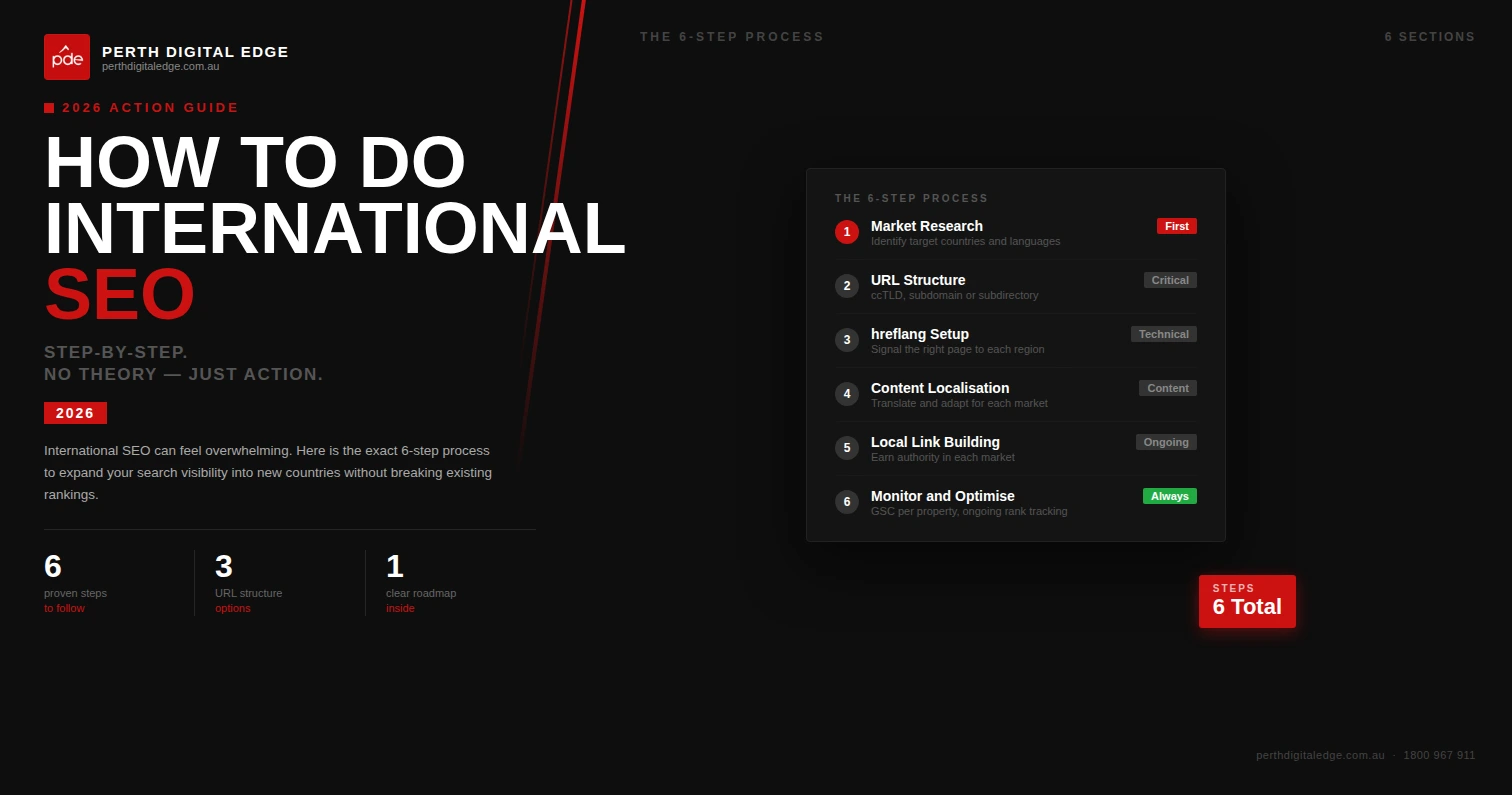
The short version is this. A winning international seo strategy starts with thorough market research, uses comprehensive keyword research to find relevant keywords in each target country, gets the url structure and hreflang tags right from day one, creates content that genuinely serves international visitors in their own language, builds local backlinks to earn trust in each target market, and measures international seo performance relentlessly so the plan can be adjusted as real data comes in. Everything else is detail.
Step One Start With Market Research
Every international seo engagement we run begins with thorough market research. Before we touch the website, we want to know which foreign markets actually deserve investment. Google analytics usually reveals existing pockets of organic traffic from countries the client has not actively targeted, which is a strong first signal that demand exists. We pair that with search volume data from each potential target country, competitive analysis against local competitors already ranking in those markets, and a quick reality check on whether the product or service can genuinely serve that audience.
Market research also shapes which target countries we prioritise. An international seo strategy that tries to serve ten countries at once rarely works because resources stretch too thin. We usually recommend picking two or three target countries for the first phase, getting them to a strong position, and then expanding. This sequencing matters because each market requires its own content, its own local backlinks, and its own local keyword research. Doing two markets properly beats doing ten markets poorly every time.
Step Two Conduct Keyword Research For Each Target Country
Once the target markets are locked in, we conduct keyword research in each target country using native language tools and local search volume data. The goal is to find relevant keywords that real users in that country actually type into search engines, not keywords translated from an Australian list. Even between two english-speaking countries like the UK and the US, the same product often has different keyword patterns. In non-english markets, the difference is even larger because translated keywords miss local idioms, slang, and cultural context entirely.
Our process pulls keyword data from tools like Ahrefs, Semrush, and Google Keyword Planner, then validates it against real Google search suggestions in the target country. We look for commercial intent keywords first because those drive revenue, and then build out informational content around them. Local keywords discovered this way often have lower competition than the obvious high-volume terms, which makes them easier to rank and more profitable early in the campaign.
Step Three Choose The Right URL Structure
Choosing the right url structure is a decision that shapes every subsequent step in the international seo process. The three main options are country code top level domains like example.de or example.co.uk, subdirectories like example.com/de/, and subdomains like de.example.com. Each has trade-offs. Country code top level domains send the strongest geographic signal but split domain authority across separate properties. Subdirectories keep authority consolidated but give a weaker geographic signal. Subdomains sit somewhere in the middle.
We usually recommend subdirectories for clients who want to move quickly and preserve existing domain authority, and country code top level domains for clients committed to long-term presence in specific foreign markets. The right url structure depends on the business, the budget, and the target country, and getting this decision wrong early makes everything harder later. We document the choice clearly and explain the trade-offs so the client can make an informed call rather than deferring to whatever the developer suggests first.
Step Four Implement International SEO With Hreflang Tags
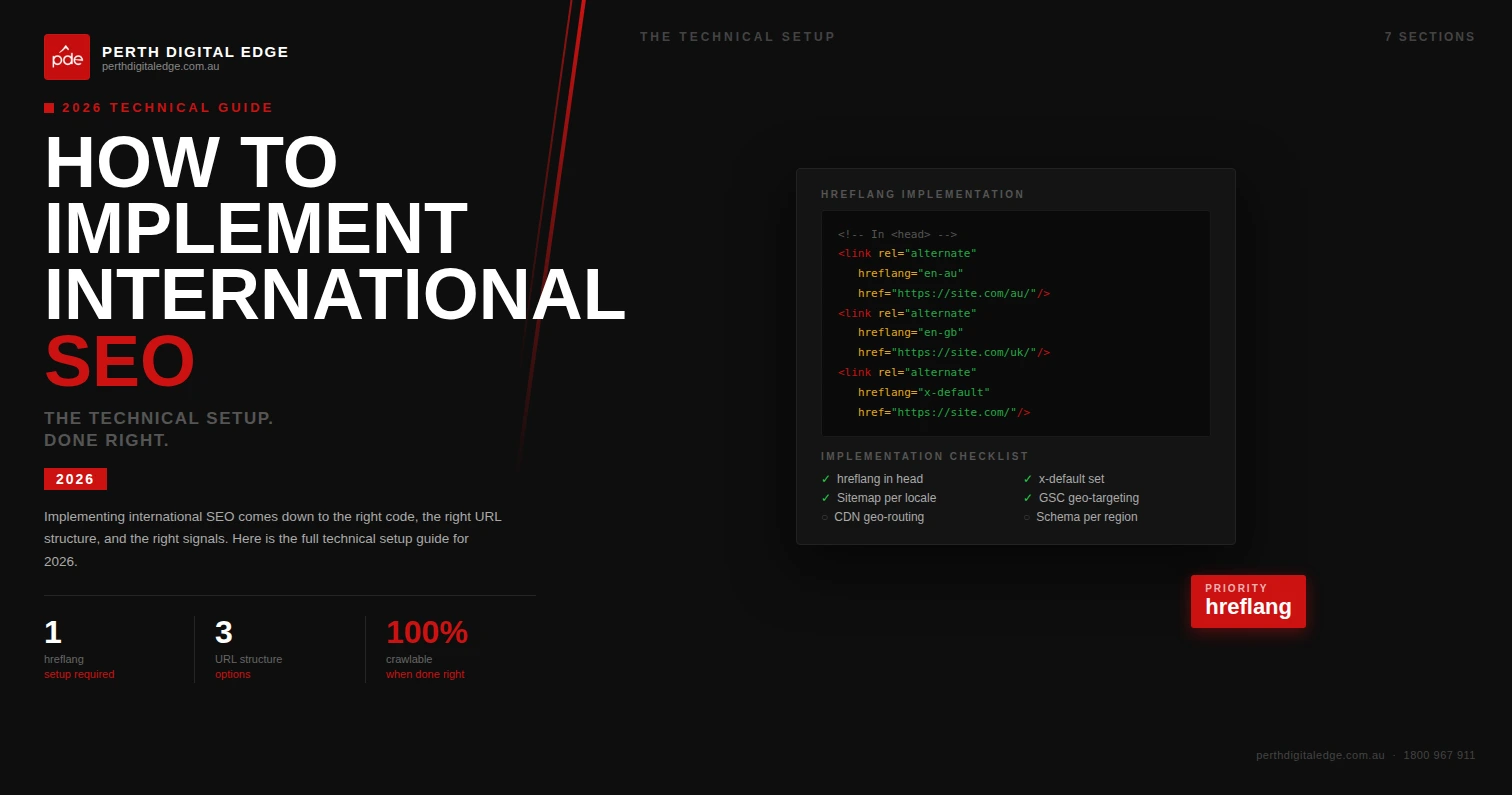
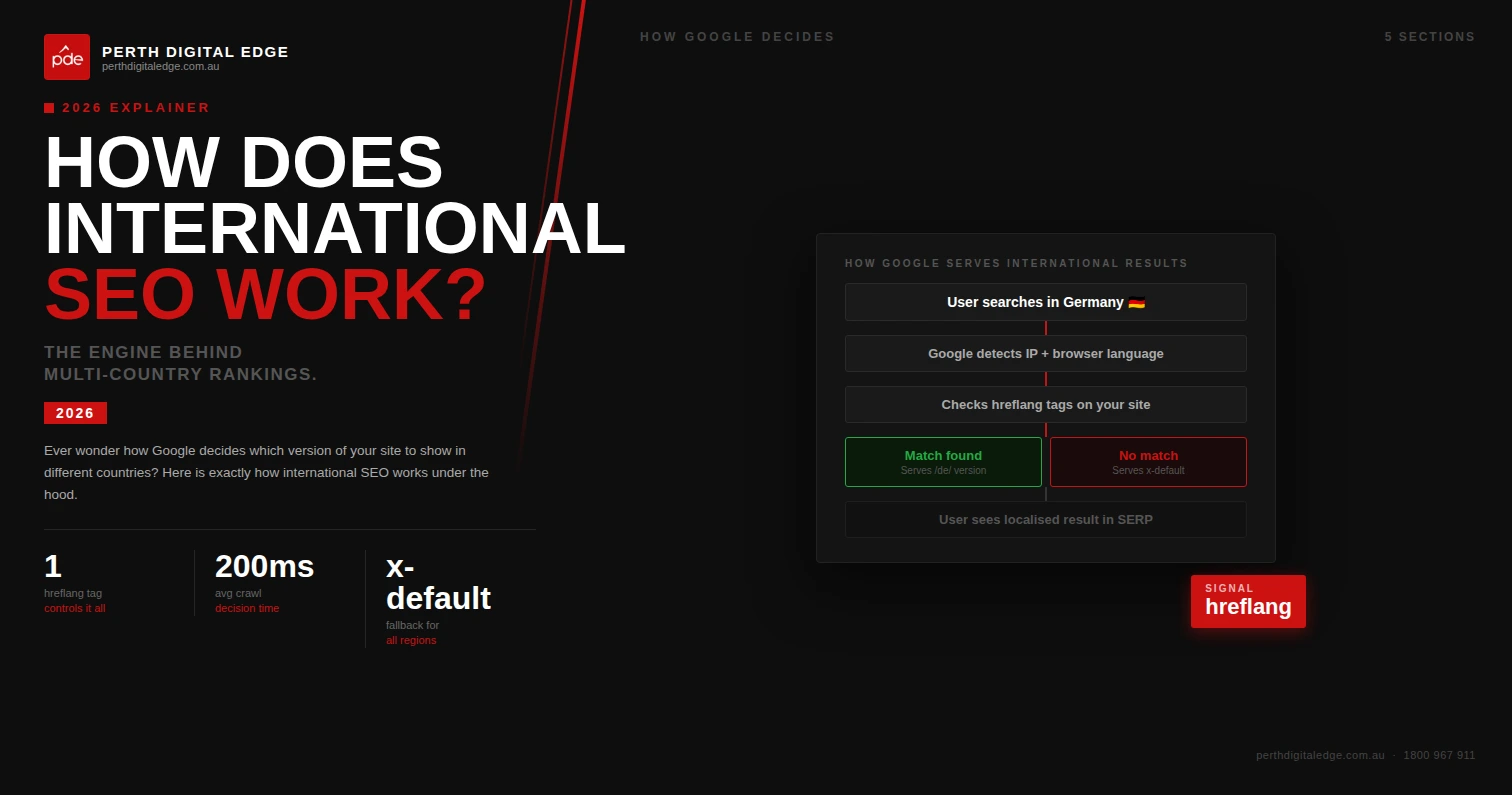
Hreflang tags are the single most important technical element when you implement international seo. They tell search engines which language version of a page is intended for which country and language combination. Without hreflang, search engines interpret multiple language versions as potential duplicate content and struggle to rank any of them properly. With hreflang implemented correctly, search engines understand exactly which page to serve to users in each target country and language.
Getting hreflang right is fiddly. Every page needs to reference every other language version, including itself. The country codes and language codes need to match ISO standards. Self-referencing tags need to be present. And any changes to the page structure need to be reflected in the hreflang tags across the whole site. We usually implement hreflang through an XML sitemap for large sites because that centralises the logic and makes maintenance simpler. For smaller sites we add hreflang in the head of each HTML page directly.
Step Five Build A Strong Technical Foundation
International sites rest on solid technical seo. If search engines cannot crawl, render, and index your pages properly, no amount of keyword research or content work will matter. We audit page speed, mobile friendliness, canonical tags, XML sitemaps, internal linking, and schema markup across every language version. International sites tend to accumulate technical debt faster than single-country sites because there are simply more pages and more templates that can break. We run a fresh audit at launch and then at least quarterly from there.
Domain authority also plays a role in how quickly new language versions can rank. A site with strong existing domain authority on its primary domain gives new subdirectory versions a head start because some of that authority flows through. Starting a brand new country code top level domain with zero backlinks is harder because there is no authority foundation to build on. We factor this into the roadmap and set realistic expectations about how long each target market will take to start producing meaningful organic traffic.
Step Six Create Content For International Audiences
Creating content for international audiences is where most international seo strategies fall down. A direct translation of existing Australian content is almost always the wrong answer. We work with native speakers and in-market reviewers to create content that genuinely serves the local market in the local language. That means rewriting rather than translating, adapting cultural references, matching local tone and voice, and incorporating local search behavior into the structure of each piece. The content has to read as though it was written by someone who lives in that country, not someone outside looking in.
Cultural nuances shape every piece of localized content. What reads as confident in Australian English can read as arrogant in German or cold in Brazilian Portuguese. We brief our writers on the emotional register expected in each target country, the common cultural references that will land, and the ones to avoid. The cost of getting this wrong is not just a weak conversion rate, it is losing trust with an audience that is harder to win back than it was to win in the first place. Localized content also needs to address local search queries directly. A US audience searching for a term will phrase the question differently from a UK audience. A German audience will expect direct, factual content. A Brazilian audience will respond better to warmer, more personal tone. Getting these nuances right is what turns a translated website into one that actually ranks and converts in each target country. We treat content creation as the most important part of the international seo process because it is the layer users actually interact with.
Step Seven Build Local Backlinks In Each Target Market
Local backlinks from publications, directories, and partners based in the target country tell search engines that your site is trusted locally. Authority built in Australia does not automatically transfer to a .de or .co.uk domain. We run targeted outreach campaigns in each target market, building relationships with local publishers, trade associations, and industry blogs to earn local links that lift search rankings in local search engines. This is slower and more expensive than buying bulk links, but it is the only approach that actually produces durable results.
Local links also help establish the right geographic signal when combined with country targeting and the right url structure. Search engines use local backlinks as one of the signals they rely on to decide whether a site is a legitimate option in a specific target country. Ignoring this layer is like building a shop in a foreign city and never telling anyone local that it exists.
For a deeper look at the fundamentals behind every step here, our explainer on what is international SEO covers the core concepts in detail, and our guide on how to implement international SEO walks through the technical execution for teams ready to build out their own playbook.
Step Eight Measure And Optimise
Measuring international seo performance is what keeps the strategy honest. We set up Google Analytics and Google Search Console to segment by country and language from day one. Key metrics include organic traffic per target country, search rankings for priority keywords in each market, conversion rate per country, and revenue attribution per market. These numbers tell us which target countries are delivering and which need more work. We review them monthly and reset the priorities every quarter based on what the data shows.
Optimisation is a continuous cycle. Search engines update their algorithms, competitors launch new content, search behaviour shifts, and new opportunities appear. An international seo strategy frozen in place for twelve months rarely keeps up. Regular audits, fresh content, new local backlinks, and targeted technical improvements compound over time to build lasting international seo success.
International SEO Best Practices For Different Markets
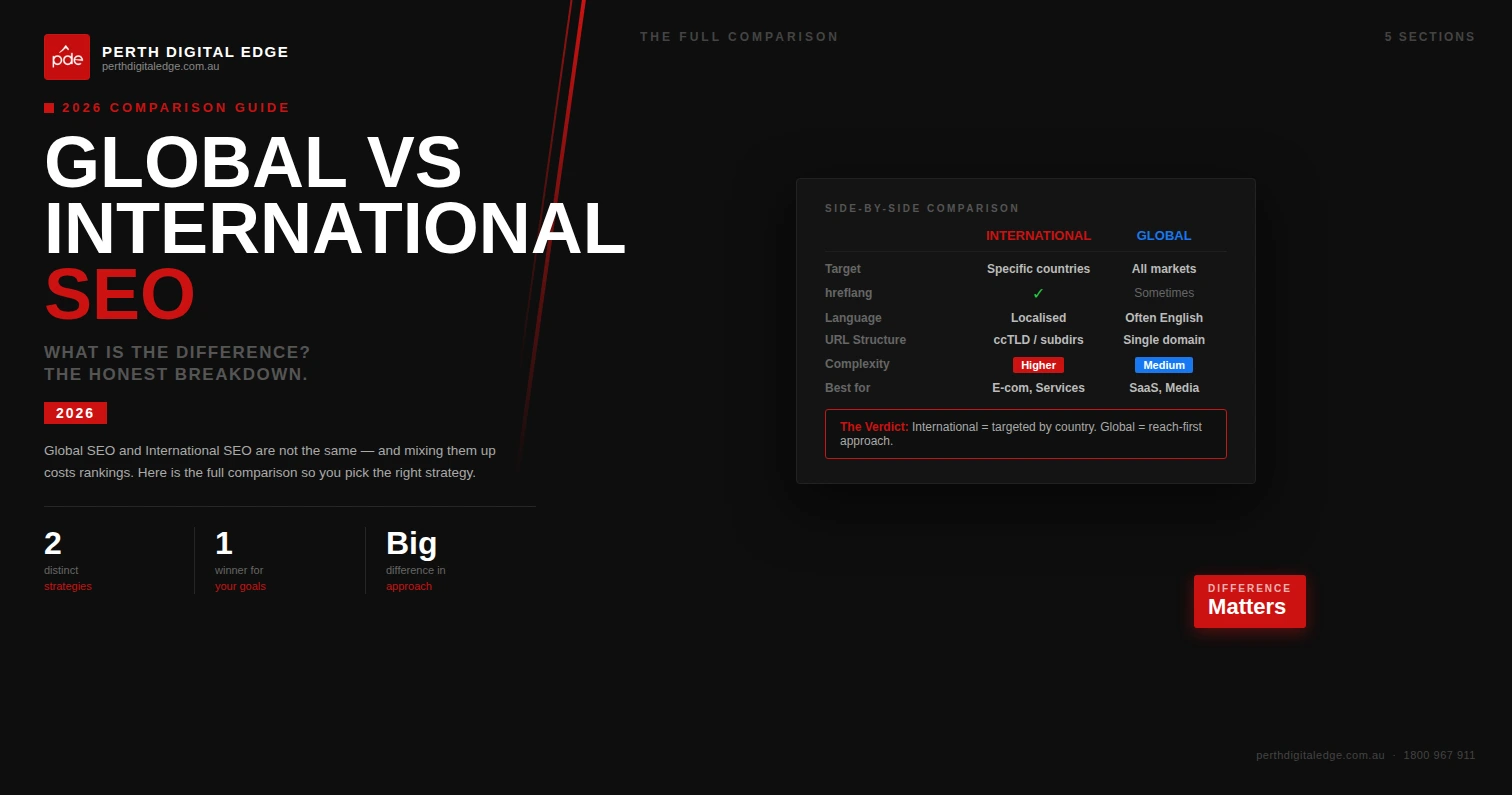
International seo best practices shift depending on the target market. An effective international seo strategy for different countries across Europe looks nothing like a successful international seo strategy aimed at Southeast Asia. European audiences respond to precise language tags, hreflang targeting, and direct content. Asian markets often need content tailored to a specific language and cultural expectations that go well beyond direct translation. Latin American markets reward warmth and personality. Different countries and languages create different editorial standards, and a global seo strategy that ignores those editorial standards will always underperform a local operator. The target audience in each international market has its own buying patterns, and ignoring them means your website pages simply do not match what the user is searching for.
A strong global seo approach layered over country-specific international seo also extends your global reach into certain countries where English search queries dominate. We have clients whose global seo strategy earns global search results across English queries while their dedicated international websites build presence in non-english markets at the same time. The two layers reinforce each other when the website’s visibility is tracked across every target country on the same dashboard.
Language Targeting Across Different Regions
Language targeting matters more than country targeting in some cases. A Spanish-speaking audience in the United States reads content in the same language as a Spanish-speaking audience in Mexico, but the cultural references and local search results differ sharply. Countries and languages do not always map one to one, and a foreign language deployment that treats them as synonymous will miss half the opportunity. We always separate language targeting from country targeting in the planning phase so we can serve different regions properly and target the local audience as accurately as possible.
Other search engines also come into play here. Baidu, Yandex, and Naver all have their own rules for handling language targeting, and relying solely on Google means missing audiences in certain countries where other search engines hold significant share. Targeting multiple countries properly means understanding how each local search engine handles different markets and different languages.
Common Mistakes We See
The most common mistake is treating international seo as a one-time setup project. Building hreflang, launching translated content, and then walking away almost never produces durable rankings. International seo rewards sustained effort, and clients who treat it as a project rather than a program usually retreat within a year. Another common mistake is ignoring how search engines interpret geographic signals across multiple international sites, which leads to contradictory cues and diluted rankings in every market.
We also see clients spread their budget too thin across too many target markets. Four or five target markets with half-baked content in each produces nothing. Two or three target markets executed properly produce real results. Picking the right number is part of the strategy conversation we have before we start any work.
How International SEO Works With Local SEO
Local seo and international seo are often treated as competing priorities, but they work better together. Strong local seo in Perth builds the domestic foundation that makes international seo expansion credible. A business that cannot rank in Joondalup or Fremantle will struggle in Manchester or Munich for the same reasons. We typically recommend clients get their local seo fully tuned before investing heavily in international seo, because the same fundamentals apply and the learning transfers across both disciplines.
When local seo is strong, the move into new markets feels less like a leap and more like a natural extension. The content systems, technical discipline, and measurement frameworks already exist. The only new element is the language and cultural adaptation for each target country. That is the work where international seo lives or dies.
Is International SEO Expensive
Is international seo expensive? Compared to domestic seo, yes, because the work is broader. Comprehensive keyword research in multiple languages, content creation for international audiences, local backlinks outreach in each target market, and the technical work required to maintain international sites all add cost. For most clients, a meaningful international seo engagement sits at two to four times the cost of a comparable domestic engagement. But the return can be proportionally larger because every target country opens a new revenue stream.
The alternative is usually more expensive. Paid advertising across global markets runs into serious budget quickly, and the moment you stop paying, the traffic disappears. Organic international seo efforts compound over time and keep producing leads long after the initial investment. For clients with a long-term view, international seo is one of the better returns on investment available in digital marketing, particularly when the alternative is paid media scaled across global markets month after month.
Our Experience And Case Studies
Ben Tippett founded Perth Digital Edge more than a decade ago, and our team has built international seo campaigns across ecommerce, professional services, tourism, and resources. For Westside Auto Wholesale, broader seo work delivered a 4,900% return on investment, 1.4 million visitors, and 120,000 leads. For Castle Security, technical and content work lifted organic traffic by 364% and placed 109 keywords on page one within six months. For Wholistically Healthy, the work lifted traffic 118% and conversion rate 51%. For Eco Style Pool Renovations, PageSpeed improvements took the site from 27 to 86.
Not every engagement is a pure international seo play, but the same discipline underpins every result. The ability to execute across multiple markets and different languages comes from the same foundation we bring to Australian campaigns. When a Perth client is ready to move internationally, that foundation travels with them.
Frequently Asked Questions
The questions we hear most from clients working out how to do international seo for the first time.
How Long Before We See Results From International SEO?
Most clients see early indicators within three to six months, including improved search rankings for long-tail queries and growing organic traffic from the target country. Meaningful revenue usually follows between six and twelve months depending on how competitive the target market is.
Do We Need To Write Every Page In The Target Language?
For non-english target markets, yes. Machine translation alone rarely ranks well because local users spot it immediately. We recommend native speaker writing or at least native speaker review for every page intended to rank in search results.
Can We Do International SEO Ourselves?
Some parts are approachable for in-house teams, especially once the technical foundation is in place. Ongoing content creation and local backlinks outreach can be handled internally with the right resources. The initial strategy, hreflang setup, and keyword research usually benefit from specialist help because mistakes at that stage are expensive to fix.
Which Target Market Should We Start With?
Start with the target country where Google Analytics already shows organic traffic, or where your existing customer base indicates demand. Launching into a target market with no existing signal is possible but slower. A market with early signal converts faster because there is already some awareness of your brand.
Final Thoughts And Next Step
How to do international seo comes down to discipline. Market research first, then keyword research, then technical setup, then content, then local backlinks, then measurement, then optimisation. Skipping steps costs rankings. Doing them in order compounds results over years. If you want an experienced Perth team to guide your international expansion, our international SEO services in Perth are built around this exact process. Book a free strategy session with our team and we will map out exactly how to reach your target markets properly.