
Every year since about 2015, someone in the digital marketing world publishes a piece declaring that SEO is dead. Social media killed it. Voice search killed it. AI killed it. The headlines get clicks, the hot takes get shared, and then twelve months later organic search is still driving more qualified web traffic than any other channel for the majority of businesses online. The declaration has become its own annual tradition, like Melbourne Cup sweepstakes and complaining about daylight saving.
But 2026 is different, and pretending otherwise would be dishonest. Google’s AI overviews are now rolled out across a huge range of queries. AI search engines like Perplexity, SearchGPT, and Gemini are pulling real users away from traditional search results. Zero click searches account for a growing share of all Google queries. If you are running the same SEO strategy you ran in 2022 and wondering why website traffic is softening, you are not imagining things. The landscape has shifted. The question is whether that shift means SEO dead or SEO evolving, and the answer matters enormously for how you spend your marketing budget this year and next.
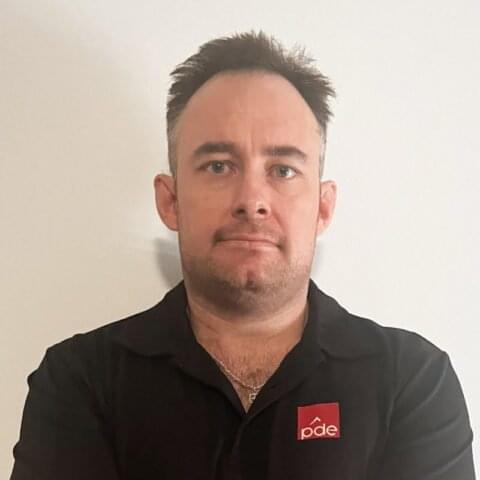
Ben Tippett has been doing this work at Perth Digital Edge for over a decade. He has watched every wave of “SEO is dead” panic come and go. This one feels different to him, not because organic search is dying, but because the businesses that refuse to adapt will genuinely lose traffic in ways they did not before. This is not a drill. It is also not a funeral.
What Has Actually Changed in 2026
The biggest shift is that Google’s AI now generates direct answers to a significant portion of queries. When someone asks “how much does a plumber cost in Perth,” Google increasingly serves an AI generated answer at the top of the search results page before any blue links appear. AI overviews pull information from multiple sources, synthesise it, and present their own answer directly. The user gets what they need without clicking through to your site. For informational queries especially, this has compressed click-through rates on traditional search results.
AI summaries are not the only pressure. AI search engines are emerging as genuine alternatives to traditional search engines. Perplexity processes millions of queries daily. Google’s own AI mode is cannibalising its traditional search product from within. People search differently now. They ask longer, more conversational questions. They expect direct answers, not a list of ten blue links to sort through themselves. Search behavior has fundamentally shifted from “find me a list of pages” to “give me the answer.”
Featured snippets were the early version of this. They trained users to expect answers on the search results page itself. AI overviews are featured snippets on steroids, pulling from multiple sources, generating synthesised responses, and sometimes not citing sources at all. The result is more zero click searches and less organic traffic for sites that relied on ranking for simple informational queries.
Then there is the fragmentation. Traditional search engines no longer hold a monopoly on how people find information. AI platforms like ChatGPT, Claude, and Gemini answer questions directly. Voice search through Alexa and Siri bypasses traditional search entirely. Social platforms serve as discovery engines for younger demographics. The assumption that Google search is where all your potential customers start their journey is no longer safe.
Why Traditional SEO Tactics Alone No Longer Work
Traditional SEO tactics built around keyword stuffing, thin content targeting high search volume terms, and chasing just keywords without considering user intent were already declining before AI. But AI has accelerated their irrelevance.
Here is what has specifically broken. Traditional SEO metrics like ranking position and organic traffic no longer tell the complete story. You can rank number one for a query and still lose traffic because Google’s AI serves an AI generated answer above your listing and the user never scrolls down. Branded search volume growth is replacing generic organic traffic as the metric that actually correlates with business outcomes. Direct traffic trends are becoming as important to track as organic traffic trends because they reflect whether people know your name and seek you out specifically.
Content created purely to rank for search engine optimization terms without offering genuine expertise gets filtered out faster than ever. Google rewards content that demonstrates real experience, expertise, authoritativeness, and trustworthiness, what the industry calls E E A T. AI systems are trained to recognise authoritative content and prioritise sources that demonstrate genuine expertise over sources that simply target the right keywords. The days of ranking a 500-word article written by someone who has never touched the subject are functionally over.
Traditional search is not dead. But traditional SEO tactics applied without adaptation to the AI layer are increasingly ineffective. The businesses still growing organic traffic in 2026 are the ones that recognised this shift early and adapted their content strategy accordingly.
What Modern SEO Actually Looks Like
Modern SEO in 2026 is not one discipline. It is three overlapping practices working together: traditional search engine optimisation, generative engine optimization, and brand building. Miss any one of them and you are leaving visibility on the table.
Search engine optimisation still matters
Technical SEO is more important now than it was five years ago, not less. Core web vitals, site speed, mobile optimization, structured data, schema markup, and clean site architecture are the foundation that everything else depends on. If your site is slow, poorly structured, or missing structured data that helps search engines understand your content, no amount of clever content will save you. Helping search engines understand your pages through proper technical implementation is the price of entry.
Generative engine optimization is the new layer
Generative engine optimization GEO optimizes content so that AI systems cite your site when generating AI answers and AI generated responses. This means structuring content so AI engines can extract clear, quotable statements. It means building the kind of trust signals, brand authority, and citation patterns that make AI platforms reference your site as a source. GEO optimizes content for AI visibility in the same way traditional SEO optimized content for search engine visibility. They are not competing strategies. They stack.
Brand authority is the thread connecting everything
When AI tools generate answers, they pull from sources they have been trained to trust. Branded search volume, the number of people searching for your business by name, is a signal that both Google and AI systems use to evaluate authority. Digital PR, genuine media coverage, industry recognition, and consistent brand presence across the web all feed brand authority. A business with strong brand authority will appear in both traditional search results and AI generated answers. A business without it will gradually disappear from both.
At Perth Digital Edge, we have restructured our entire SEO strategy framework around this reality. When we work with clients like Wholistically Healthy, who have held the number one position for “healthy meals delivered Perth” for five years, the strategy is not just about maintaining a ranking. It is about ensuring they appear in AI overviews, that their brand is cited by AI platforms when someone asks “best healthy meal delivery in Perth,” and that their branded search volume continues growing. That is what SEO in 2026 demands.
How To Adapt Your SEO Strategy for AI Search
If you are a business owner reading this and wondering what to actually do, here is the practical version.
Audit your traffic sources now. Look at your Google Analytics. Is organic traffic declining while direct traffic is growing? That might mean AI driven traffic is sending people to you by name rather than through search results. Track branded search volume alongside organic traffic. If branded search volume growth is up while organic is flat, your brand is working even if traditional SEO metrics look soft.
Create content that AI systems want to cite
AI answers tend to reference content that is clearly structured, genuinely expert, and definitively stated. Write content that takes a position. Provide specific data points, original insights, and clear answers to specific questions. Vague, hedging content that tries to rank for everything without saying anything definitive gets ignored by both people search behaviour and AI engines. When you create content, write it as if an AI is going to extract a single paragraph to use as its own answer, because increasingly that is exactly what happens.
Invest in answer engine optimization
Answer engine optimization is the practice of structuring your content so that AI platforms and voice search devices select your content as the source for their answers. This overlaps with GEO but extends to voice assistants, AI chatbots, and any system that provides a direct answer rather than a list of links. Provide clear, concise answers near the top of your content. Use question-and-answer formatting where appropriate. Make it easy for AI to extract and attribute.
Do not neglect local SEO
Local SEO has actually become more resilient to AI disruption than general informational SEO. When someone searches for a service provider in their area, Google still heavily relies on Google Business Profile data, reviews, proximity, and local signals. AI cannot fabricate a local plumber or invent a restaurant that does not exist. Local businesses with strong local SEO, genuine reviews, and consistent citations are maintaining their visibility better than content-only sites targeting broad informational queries. We have seen this firsthand with our Perth trades clients. Their local SEO traffic has remained stable or grown through 2025 and into 2026 while their informational blog content has taken the hit from AI summaries. The takeaway is clear: local intent queries are the most AI-resistant category of search, and if you serve a geographic area, local SEO should be the last thing you cut from your budget.
Double down on E.E.A.T signals
Google rewards sites that demonstrate real experience, expertise, authoritativeness, and trustworthiness. AI systems train on the same signals. Author bios with verifiable credentials, first-party case studies with specific data, genuine client testimonials, media mentions, and industry affiliations all feed E.E.A.T. Ben Tippett’s background is publicly verifiable. His martial arts career, his business history, his client work, it is all documented. That specificity is not vanity. It is a trust signal that both Google and AI systems use to evaluate whether Perth Digital Edge is a legitimate source worth citing.
What Happens If You Do Nothing
The businesses asking “is SEO dead in 2026” are often asking the wrong question. The right question is: what happens to my visibility if I keep doing what I did in 2023?
The honest answer: you will gradually lose traffic from informational queries as AI summaries absorb that demand. You will see organic traffic from AI content recommendations shift toward brands with stronger authority signals. You will watch competitors who adapted early appear in AI overviews while your site does not. You will not disappear overnight. But the erosion will compound quarterly until the gap between where you are and where you should be becomes expensive to close.
The businesses that stay competitive in 2026 and beyond are the ones treating this shift as an evolution, not an extinction event. They are investing in technical SEO, content quality, generative engine optimization, brand building, and the kind of genuine expertise that both search engines and AI platforms recognise as authoritative content worth surfacing. SEO dead in 2026? No. But SEO unchanged in 2026 might as well be.
Is SEO Dead in 2026?
No. SEO is not dead but it has evolved significantly. AI overviews and AI search engines have changed how people find information, reducing clicks on traditional search results for some query types. However, organic search still drives the majority of qualified website traffic for most businesses. The SEO strategy that works in 2026 combines traditional search engine optimisation with generative engine optimization and brand authority building. Businesses that adapt to this reality will stay competitive. Those relying solely on traditional SEO tactics from five years ago will gradually lose traffic.
What is Generative Engine Optimization?
Generative engine optimization GEO is the practice of optimizing your content and online presence so AI systems cite your brand when generating AI generated responses. GEO optimizes content for AI visibility by building clear, authoritative, well-structured content that AI tools and AI platforms can extract and reference. It works alongside traditional SEO rather than replacing it, adding a layer of optimization for AI driven traffic sources.
How Do AI Overviews Affect Website Traffic?
Google’s AI overviews provide AI generated answers directly on the search results page, which reduces clicks to websites for many informational queries. Sites that previously ranked well for simple question-based queries may lose traffic as users get their direct answer without clicking through. However, sites cited within AI overviews can gain visibility and brand authority. Adapting your content strategy to be cited by AI mode and AI overviews is now an essential part of modern SEO.
Should Small Businesses Still Invest in SEO?
Yes. Local SEO in particular remains highly effective for small businesses because AI cannot replicate local presence, reviews, or proximity. Technical SEO, core web vitals, and site speed continue to directly affect rankings. The investment should evolve to include brand building and content that demonstrates genuine expertise, but abandoning SEO entirely would mean surrendering the channel that still generates the most qualified organic traffic for local and service-based businesses.
Build an SEO Strategy That Works in the AI Era
The digital marketing landscape in 2026 is more complex than it was two years ago. That is not a reason to panic. It is a reason to get specific about what actually drives visibility now and what will drive it next year. At Perth Digital Edge, Ben Tippett and the team build SEO and digital marketing strategies for Australian businesses navigating exactly this transition. We combine technical SEO, content strategy, generative engine optimization, and brand authority work into a single framework designed to capture traffic from both traditional search engines and AI search engines. If your organic traffic is softening and you are not sure why, or if you want to get ahead of the AI shift before your competitors do, get in touch. We will audit where you stand and show you exactly what needs to change.