What’s the difference between global and international SEO, and does the distinction actually matter for your business? After more than a decade running campaigns out of Perth Digital Edge for clients chasing audiences worldwide, our answer is yes, it matters enormously. The two terms get used interchangeably in the SEO world, but they describe meaningfully different approaches to reaching different markets. Getting the distinction right shapes everything from your website structure to your keyword research to how you measure success across different countries.
This article walks through the key differences between global and international SEO, explains how each relates to local and traditional SEO, and lays out how we decide which approach suits a client’s business objectives.
The Simple Definitions
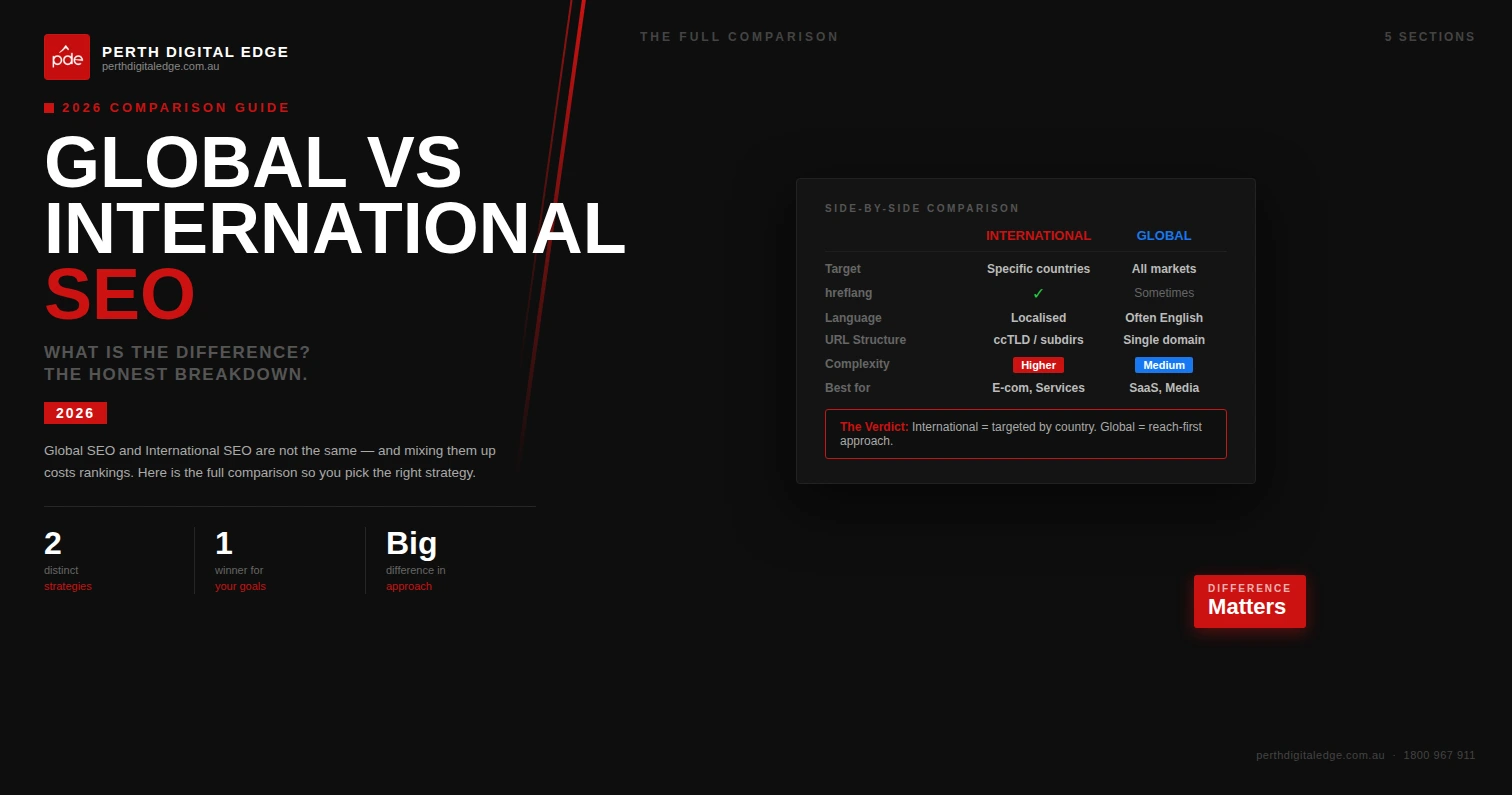
Global SEO makes a website visible to audiences worldwide on a global scale, usually without carving the site into separate country versions. It treats the internet as a single marketplace and dominates english-language search results across multiple countries at once. International SEO is narrower. It involves dedicated language versions, country targeting through hreflang tags and country code top level domains, and a tailored international SEO strategy for each target market and target audience.
Put simply, global SEO aims for broad visibility with a single face, while international SEO builds dedicated local presences in multiple countries with coordinated language versions and culturally aware content. The emotional contrast matters more than the semantic one. Global SEO feels like projection. International seo feels like arrival.
How Global SEO Works
Global SEO typically runs on a single domain serving a single language, most often English. The goal is strong domain authority and broad topical authority that ranks across many countries at once. A successful international SEO strategy and a global SEO strategy can look similar from the outside, but global SEO rarely invests in cultural nuances, local keywords, or local search results optimisation. It relies on English being the common language of business across most global markets and accepts that search rankings will vary by country.
Global SEO strategies suit businesses with a product that does not need heavy localisation. SaaS companies, thought leadership brands, and some B2B consultancies fit this model. When the buyer reads and transacts in English regardless of location, global SEO delivers efficient results without the cost of multiple language versions.
How International SEO Works
International SEO serves specific audiences in different regions with content tailored to their language, culture, and search behaviour. International SEO involves hreflang tags, country-specific url structure, local keywords researched in each target country, and content that reflects local cultural nuances rather than a flattened English voice repeated in every market. It also involves building local backlinks in each target country and running international link building campaigns that earn trust with local search engines.
International SEO services cost more than global SEO because the work is broader. Comprehensive keyword research for each target market, content creation in multiple languages, and international link building all add cost. The payoff is deeper search rankings and better conversion because the content meets international audience expectations. Local SEO success in each target market is what international SEO focuses on.
The Key Differences Side By Side
The key differences between local and international SEO, and between local and global SEO, come down to scope and depth. Local SEO focuses on a single area like Perth or Joondalup. Local SEO strategies revolve around Google Business Profile, local citations, and neighbourhood content. National SEO covers an entire country as a single market. Global SEO spreads a single version of the site across audiences worldwide. International SEO builds coordinated local presences in multiple international markets using multiple languages.
The technical footprint also differs. Local SEO needs Google Business Profile management. Global SEO needs domain authority and broadly relevant content. International SEO needs hreflang tags, country targeting, multiple language versions, and international link building. Each discipline has its own toolkit, which is why treating them as interchangeable leads to disappointment.
When Global SEO Is The Right Choice
Global SEO suits businesses whose buyers transact in English regardless of location. A Perth software company selling a niche B2B tool to engineers in the UK, US, and Singapore is well served by a single English domain optimised for strong global presence.
Global SEO also suits early-stage businesses testing international demand before committing to localisation. A strong global SEO strategy surfaces which countries show interest, informing where to invest in international SEO later.
When International SEO Is The Right Choice
International SEO suits businesses serving diverse audiences that need content in their own language. Ecommerce brands selling into Europe, Japan, or Latin America almost always need international SEO because buyers expect local pricing, currency, and language. Tourism operators serving different countries need it because the buying journey happens in the customer’s native language.
International SEO also makes sense when local competitors outrank you in target markets. A pure global SEO approach will never beat a local operator who has invested in international SEO best practices.
Where The Two Overlap
Global and international SEO share technical fundamentals. Both need clean technical SEO, page speed, and relevant and engaging content. Both benefit from Google Search Console data segmented by country. The overlap is real, which is why the two terms get confused, but execution diverges once you move past the shared foundations.
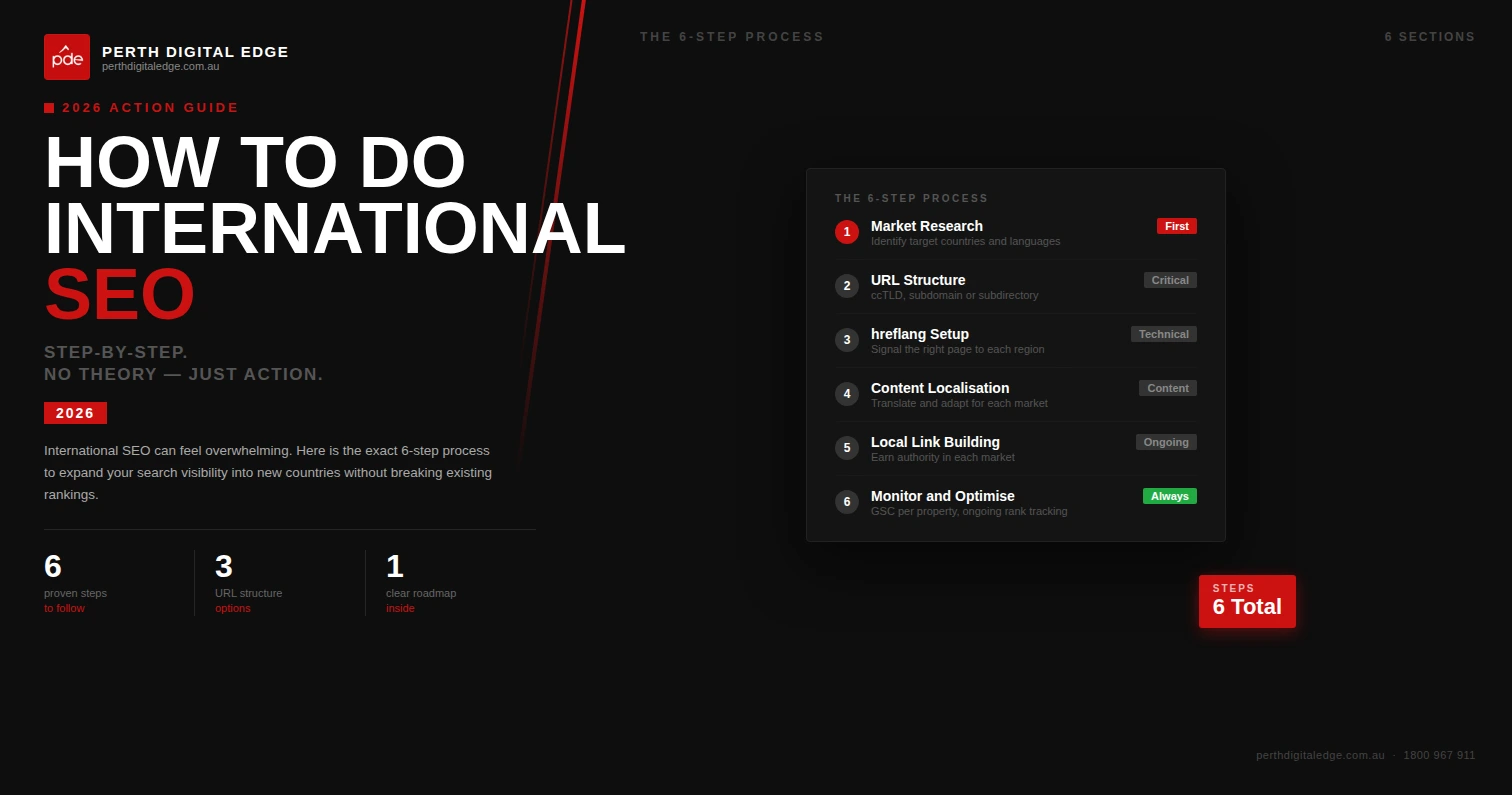
If you want to understand the specific mechanics of how international SEO handles multiple countries in practice, our deeper guide on how international SEO works walks through the technical details, and our broader explainer on what is international SEO covers the definitions and components in depth.
How We Decide Which Approach Fits
When a new client asks us about international expansion, we run a short discovery process before recommending global or international SEO. We look at the existing organic traffic by country in Google Search Console, the conversion pattern of current international visitors, the product’s localisation needs, the budget reality, and the competitive landscape in each potential target country. These signals usually point clearly in one direction. Occasionally they point to a hybrid approach where a single global domain targets English-speaking markets while dedicated country versions serve specific non-English markets.
We also look at market trends in the target market, local trends that might shift demand, and the maturity of the client’s SEO processes. A business that has not mastered national SEO is rarely ready for international SEO. A business with a dominant domestic position is usually ready for either approach and should choose based on business objectives rather than budget.
Case Studies And Our Experience
Ben Tippett founded Perth Digital Edge more than a decade ago. For Westside Auto Wholesale, broader SEO work delivered a 4,900% return on investment, 1.4 million visitors, and 120,000 leads. For Castle Security, technical and content work drove organic traffic up 364% and placed 109 keywords on page one within six months. For Wholistically Healthy, the work lifted traffic 118% and conversion rate 51%. For Eco Style Pool Renovations, PageSpeed improvements took the site from 27 to 86.
Whether a client needs global reach or international depth, the same rigor applies.
Common Mistakes We See
The most common mistake is assuming global SEO will automatically deliver international SEO success. A strong global SEO strategy can produce visibility in english-speaking markets but will always lose to a dedicated international SEO strategy in non-English markets. Another common mistake is launching dedicated language versions without budget for content maintenance, leaving stale translated pages that hurt search engine algorithms’ trust signals. International SEO depends on sustained investment.
We also see businesses run parallel local SEO strategies and international SEO strategies without coordinating them, which fragments domain authority. A successful international SEO strategy ties together local SEO focuses, global ambitions, and technical SEO in a single coherent plan.
Picking The Right Path For Local Businesses
For local businesses testing the waters internationally, the choice between an effective international SEO strategy and a lean global SEO approach comes down to depth. Unlike local SEO, which rewards hyperlocal trust signals, international SEO depends on a deep understanding of international search engine algorithms across other search engines and different languages. Targeting global audiences across international sites requires thorough market research. A local audience buying a product at home behaves nothing like a global audience buying the same product from across the world.
The technical aspects differ too. Effective SEO strategies for a global stage demand different hreflang and content hierarchy than effective SEO strategies aimed at a local audience. Online visibility in new markets depends on proving to local search engines that your international sites deserve to rank. Global success comes from that unglamorous work done well across every technical aspect.
A Side Note On Language, Identity, And Trust
There is a quieter dimension to this conversation that rarely makes it into agency decks, and it is the one we find most interesting. Search is a cultural act. A German buyer hunting for industrial tooling at 9pm on a Tuesday is not just running a query, they are rehearsing a small ritual of trust. They read the page and decide in about three seconds whether the writer actually understands them. International SEO is the discipline of earning that three-second verdict across borders. Global SEO sidesteps it by addressing everyone in the same English voice and hoping enough people accept the invitation. Neither is wrong, but they ask for very different emotional commitments from the business doing the work.
Running campaigns out of Wanneroo for clients who ship from Fremantle to Rotterdam has taught us that the emotional texture of language matters. When a Scarborough exporter first sees their German product page outrank a Munich competitor, there is a specific kind of joy in the room. When a Subiaco consultancy finally gets a reply from a French lead because the landing page sounded native rather than borrowed, we get a message that week telling us it worked. These moments are the part of international SEO that dashboards cannot capture.
International SEO Depends On Patience
International SEO depends on patience more than almost any other SEO discipline. Search engines need time to evaluate new language versions, assign local relevance, and adjust search rankings. Early international SEO efforts often show little movement for three to four months, and clients who give up lose everything. Sticking with a robust international SEO strategy through the quiet phase separates the clients who dominate their target markets from those who retreat to local traffic and local rankings.
Frequently Asked Questions
The questions we hear most when clients are weighing up global versus international SEO.
Can We Run Both Global And International SEO At The Same Time?
Yes, and for larger businesses this is often the right answer. A global english domain can target english-speaking markets while dedicated country versions serve specific non-english markets. The trick is coordinating them so they do not compete with each other in the same search engine results pages.
Which One Produces Faster Results?
Global SEO usually produces faster visible results because it builds on a single domain with existing authority. International SEO takes longer because new language versions need time to earn trust in each local market. Over a two-year horizon, international SEO typically produces deeper and more durable results in non-english markets.
Does International SEO Require More Budget?
Yes. International SEO involves more keyword research, more content creation, more link building, and more technical work across multiple domains or subdirectories. The cost typically runs two to four times a comparable global SEO engagement, but the return can be proportionally larger in markets where local competitors dominate english-only sites.
How Do Search Engines Understand Which Version To Serve?
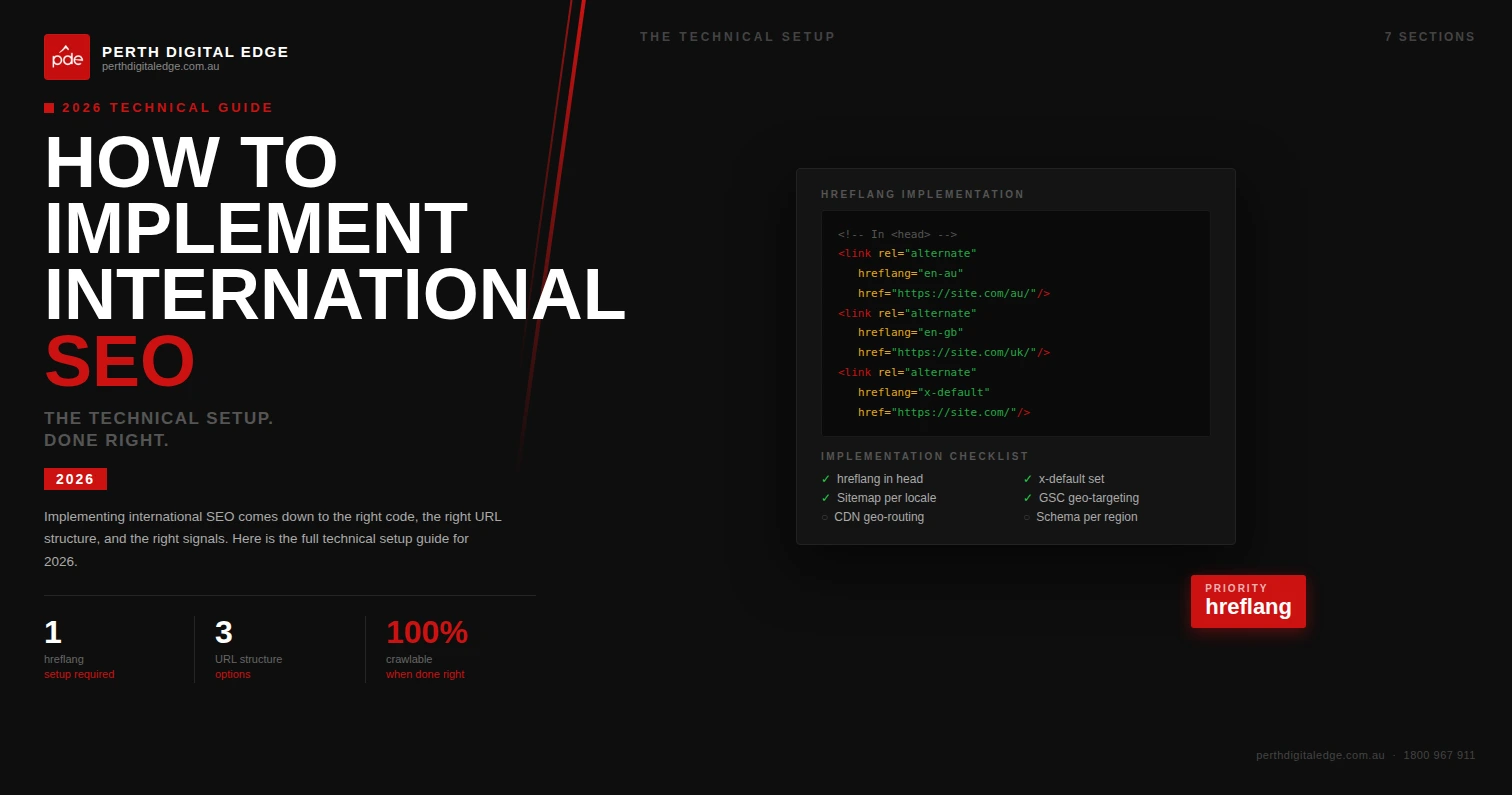
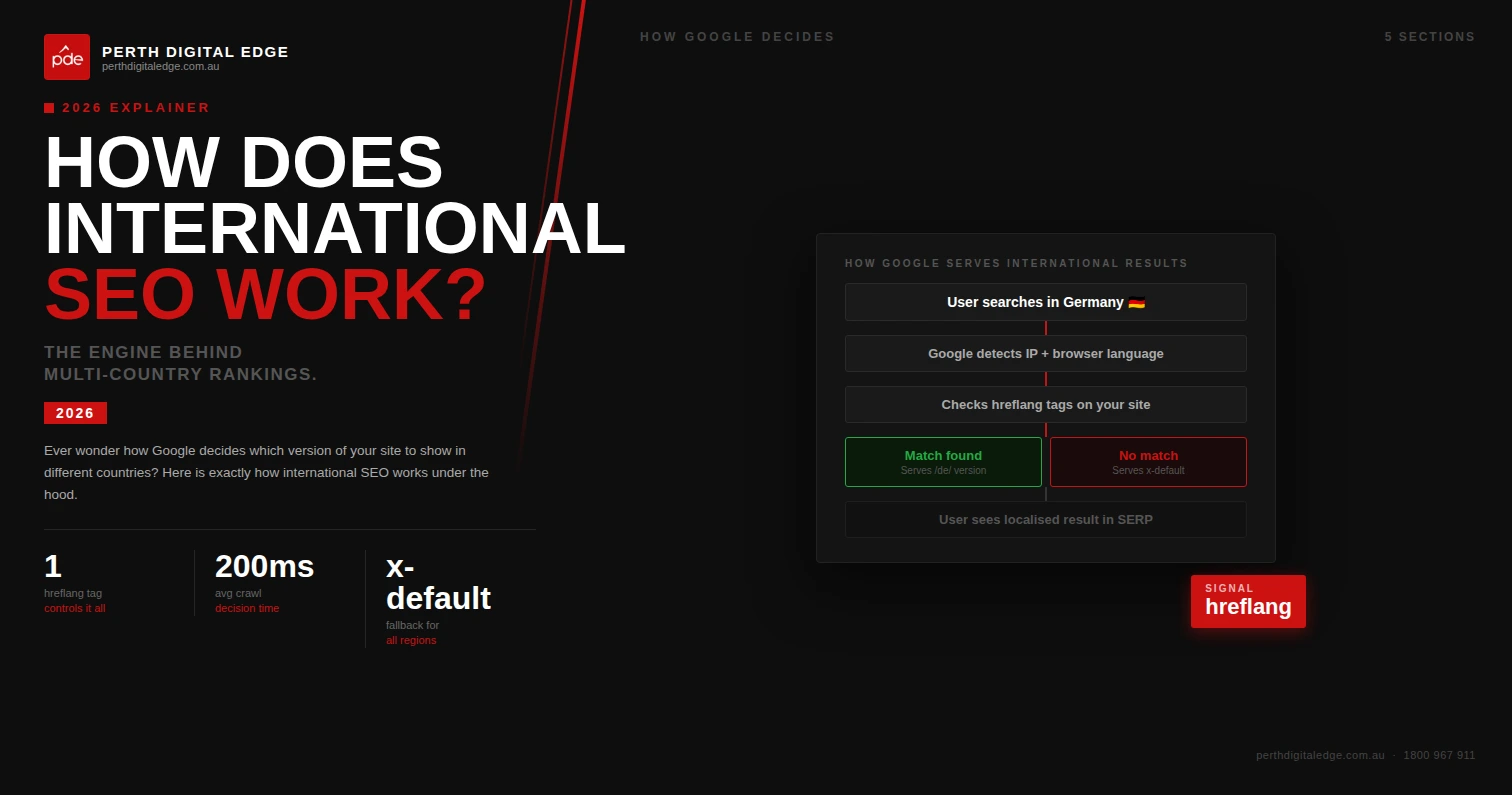
Search engines understand which language version to serve through hreflang tags, url structure, server location, and user signals. Hreflang is the single most important technical element because it tells search engines explicitly which page belongs to which country and language combination.
Final Thoughts And Next Step
The difference between global and international SEO comes down to depth. Global SEO chases audiences worldwide from a single domain. International SEO builds dedicated presences in multiple countries with local language, local content, and local backlinks. Choosing the right approach depends on your product, your buyers, and your appetite for investment. If you want an experienced team to help you choose and execute, our international SEO services in Perth are built around this exact question. Book a free strategy call with our team and we will map out whether global or international SEO fits your business best.