
Google Trends: A Practical Guide for Australian Businesses
Learn how Perth businesses read Google Trends, filter by Western Australia, spot seasonal demand and decide what to publish, bid on or ignore.
Published
24 November 2026
Read time
6 min read
Google Trends is a free tool from Google that shows search interest in a search term over time, scored from 0 to 100. Perth businesses use Google Trends data to compare search terms and decide what to publish, bid on or ignore. Perth Digital Edge’s 4×4 Extras Google Ads account delivered 44 conversions a month on a $1,500 monthly ad spend, and I check every trend line against results like that.
Perth Digital Edge is a Perth digital marketing agency based in Perth, operating since 2016. I am Ben Tippett, the founder, and this blog post helps Western Australian owners read search trends without mistaking them for sales. It also answers what people searching for “Google Trends australia today” want: a clear view of today’s trending topics, and what to do with them.
What Does Google Trend Data Say About Search Interest?
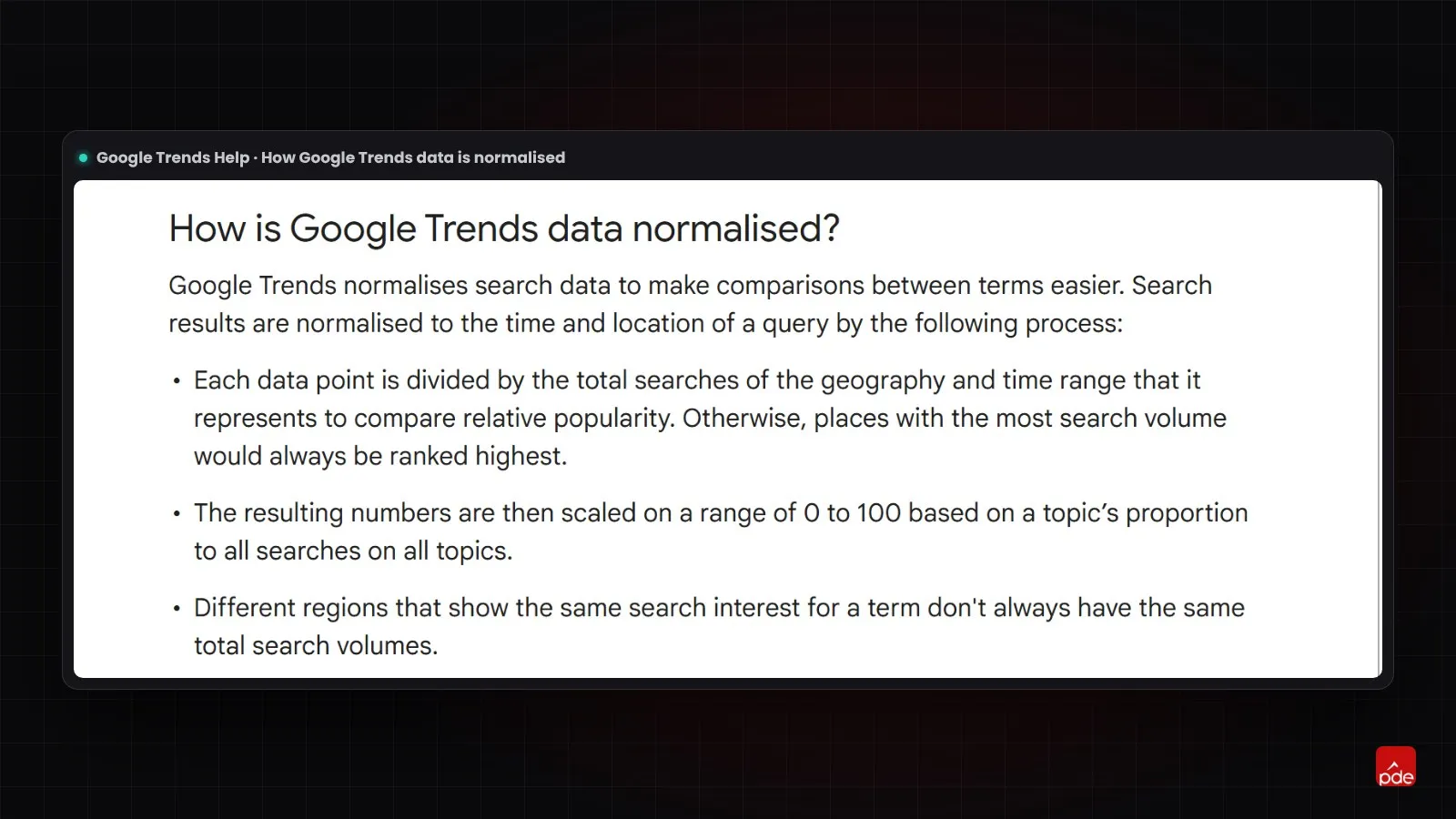
The Google Trends score is a relative measure of search interest. A score of 100 marks peak popularity in the selected time frame, and 50 means half that peak. The interest over time chart is the first thing the tool shows. Changing the time range or the country moves the whole line, so confirm Australia is selected first. A term that looks flat nationally can show a clear curve in Western Australia, which is why Google Trends search results need a location.
Is Google Trends Search Volume?
No. Google Trends does not provide absolute search volume, only relative popularity. For counts of search queries, use Keyword Planner inside a Google Ads account.
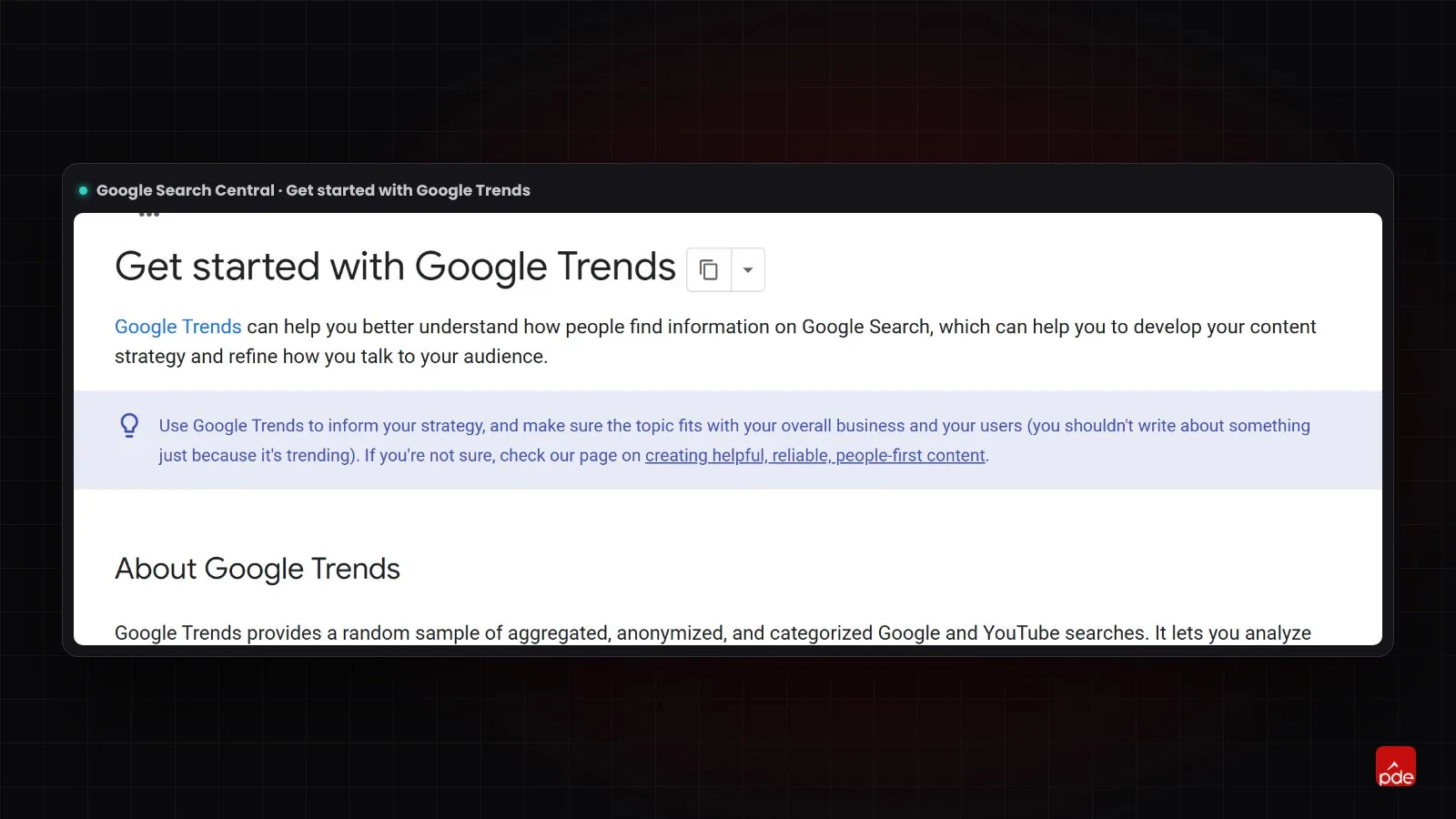
Google Trends data is based on sampled searches and may not cover every query, as Google’s own help page explains. Treat search trends data as a random sample: reliable for the shape of a curve, weak for exact counts. Google also says the data does not reflect actual sales, so read small gaps between two lines with caution.
Google Trends Today: Explore Versus the Trending Now Page
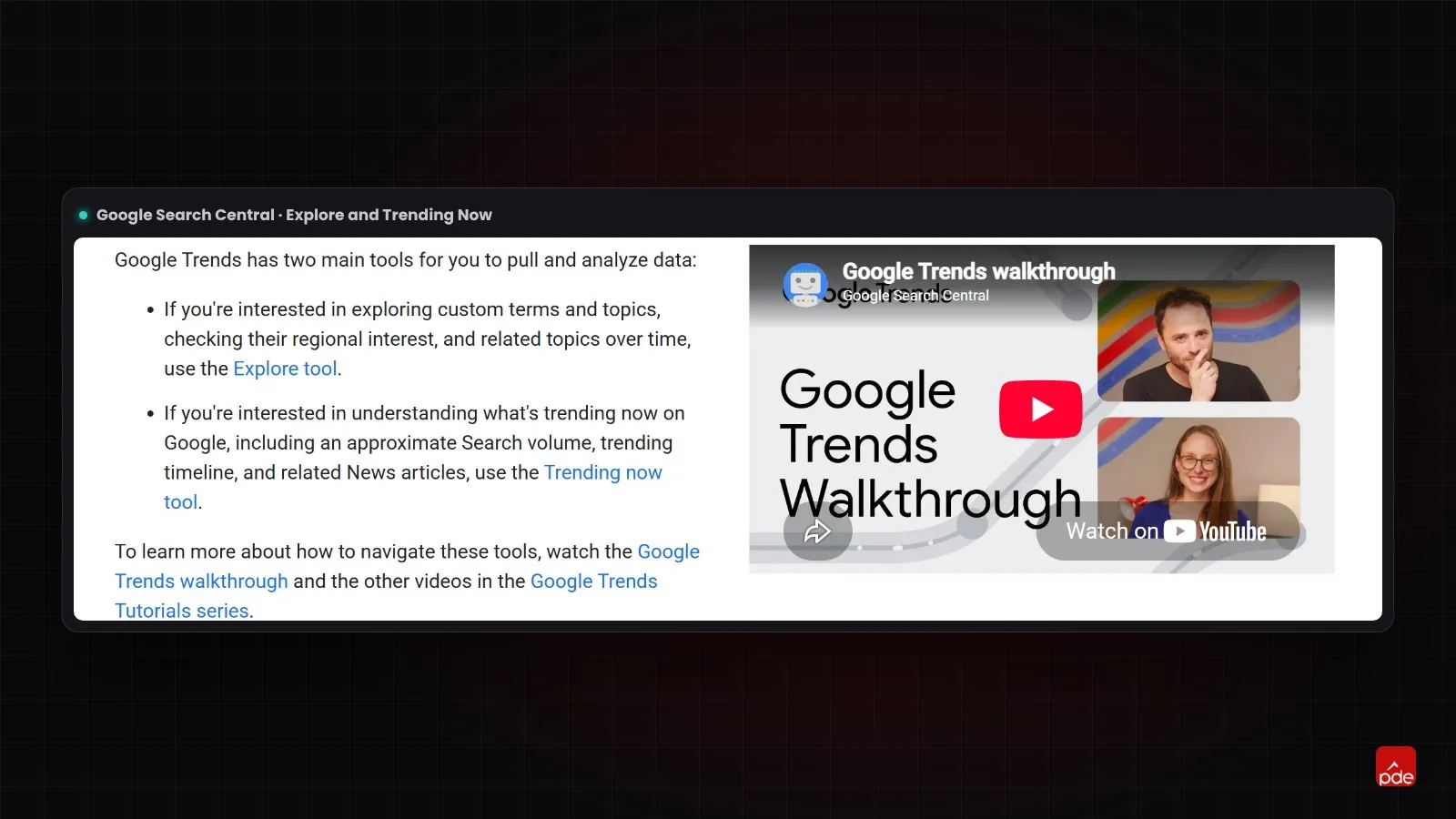
People searching for “Google Trends australia today” or “perth trending searches today” usually want Trending Now, which updates every 10 minutes on average, according to Wikipedia. It lists daily search trends from Google search, a quick way to discover trending topics but a poor basis for service decisions. Most of those trends searches are news, sport and celebrity topics that will never bring a Perth plumber a customer.
Explore is the planning tool. It takes one or more search terms and shows interest over time, interest by region, related topics and related queries. It is the free tool I open before every content or ad decision. Use trends.google.com.au so the defaults suit Australia.
How to Filter Google Trends by Western Australia and Perth
- Open Explore at trends.google.com.au and enter your search term.
- Change the country setting to Australia, then narrow it to Western Australia.
- Set the time range: five years to see seasons, 12 months to see current movement.
- Scroll to interest by sub region, where Perth appears if there is enough data.
Small suburbs and niche search topics often show “not enough data”, so widen the time frame or use a broader term. The search type menu switches between web search, image search, Google News, Google Shopping and YouTube, and most service businesses should stay on web search. To compare multiple regions, test Western Australia against another state. Note your settings when you save a chart, as each filter changes the results page.
Using Google Trend Search Terms to Find Content Ideas
Google Trends works for keyword research when you use it to compare wording, not to count searches. Google allows a comparison of up to five topics or terms, so you can test how people searching in Western Australia phrase the same need. The winning phrases become content ideas for your target audience and feed a wider content strategy.
Search Terms Versus Topics
A search term matches the exact words people type, plus close variations. A topic groups all search queries about a subject across spellings and languages. Choose a search term to settle the wording of a service page, and a topic to gauge wider interest. For example, compare “pool service” with other search terms such as “pool cleaning” and “pool maintenance”, then read the related terms and related topics Google suggests.
Rising Trends and Top Related Queries
Top related queries are the most common searches linked to your term. Rising queries show rising trends, the searches growing fastest. They can increase by over 5000% in a short time, according to Google’s documentation, usually from a very small base. Treat rising search topics and emerging trends as a prompt for further research, not proof of demand.
Validate Every Curve With Your Own Search Data
Take the winning wording to Keyword Planner and check the monthly range for Western Australia. On Google Ads for 4×4 Extras, Perth Digital Edge targets high-intent terms like “4×4 accessories Perth” and uses the search terms report to keep budget off clicks that never convert. That account recorded a 66% higher return on ad spend and a 22% lower cost per conversion, so I trust paid search data over any trend line. See the 4×4 Extras case study.
Do You Need a Google Trends API?
A Google Trends API lets developers pull search trends data into their own reports. Most Perth owners do not need one, because the free Explore page is enough.
Google Search Trends Data for Seasonal Content Planning
Reading Interest Over Time for a Perth Service
Take a pool service as the example. Compare “pool service”, “pool cleaning” and “pool maintenance” with the location set to Western Australia and the time range set to five years. Then ask:
- Which wording has the highest search interest in the selected time frame?
Perth Digital Edge built the website for 1Pool Care, a family-run Perth pool service, and ran SEO, ecommerce SEO and content. Organic traffic rose 261% and the site reached 409 page one keywords. Plan content ahead of a season, because pages published during a peak rarely rank in time. See the 1Pool Care case study.
How to Tell a News Spike From Durable Demand
Spikes in search interest may result from temporary events. A sharp single peak that does not appear in earlier years is usually news, weather or a promotion. Durable demand repeats in a certain period each year, so look for the same shape across at least three years of Google Trends data. Bears Fencing, Perth Digital Edge’s first client in 2016, reached the top of Google in three months and was still there six years later, the steady kind of demand worth building pages for.
Turning Google Trend Data Into a Content Strategy Decision
- Publish when the term has a repeating seasonal climb, Keyword Planner shows a worthwhile Western Australian range and no page of yours answers it. Build the page two to three months ahead of the usual climb, with help from our SEO service if you need it.
- Bid when interest is rising for a high-intent phrase and you can track enquiries from it. Our Google Ads management in Perth uses the search terms report to keep budget off irrelevant clicks.
For Easy Glide Garage Doors, Perth Digital Edge organised service, door type and suburb pages into linked topic clusters, a structure you can plan once Google Trends shows which wording and areas matter. Confirm each decision with Search Console impressions and your own conversion data.
Frequently Asked Questions
Next Step
To turn your search data into pages that rank and measurable enquiries, talk to Perth Digital Edge about SEO for Perth and Western Australian businesses.



Our Technology Partners and Certifications
The platforms we build, run and measure your marketing on every day.

Book a No-Obligation Strategy Session
Tell us your targets on a free discovery call and we will come back with a clear, accountable plan for SEO, Google Ads and your website.