

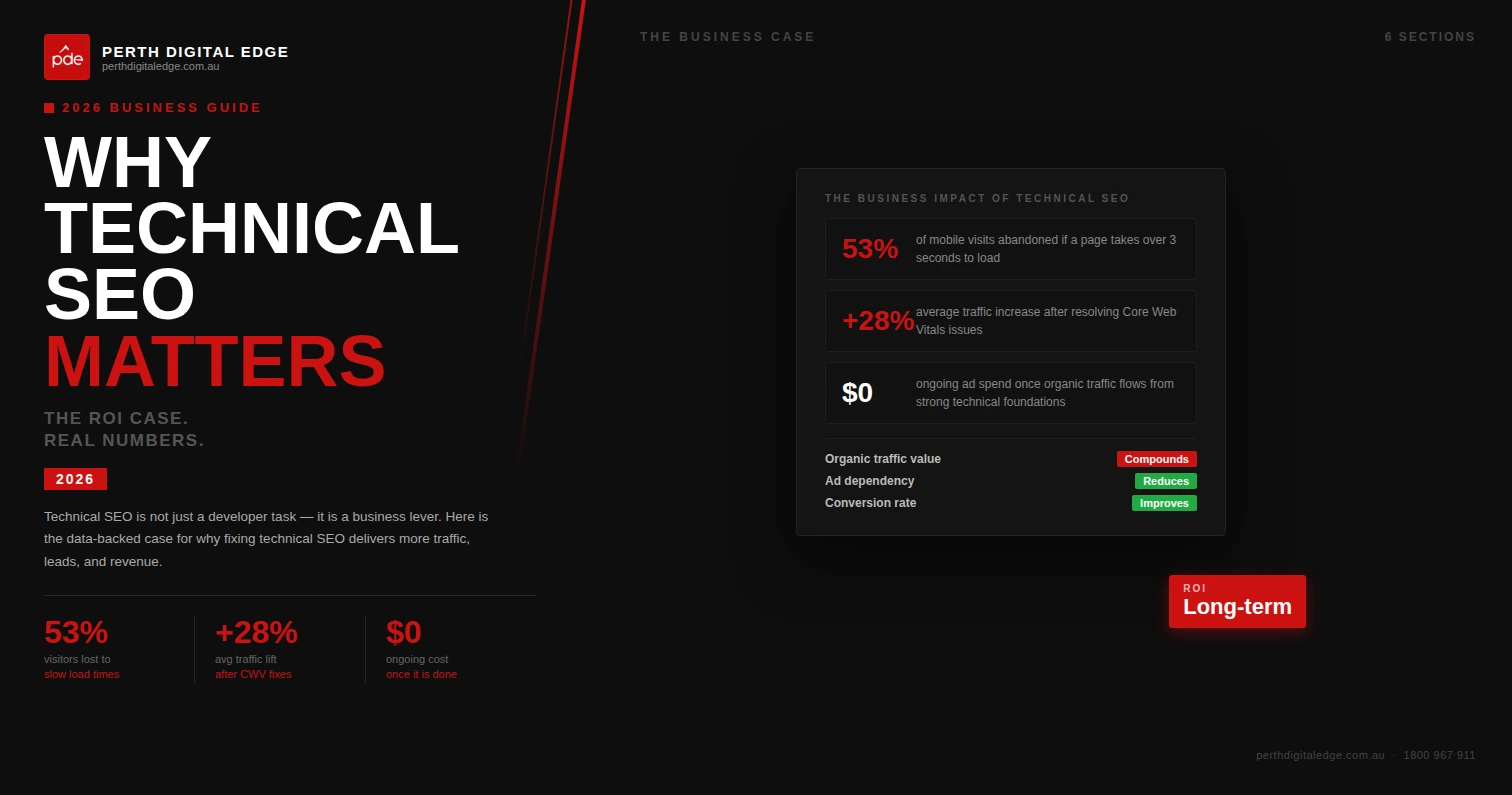
Why technical SEO matters is a question we answer almost every week. Business owners see their content ranking below weaker competitors, wonder what is going wrong, and rarely suspect the technical aspects of their website. After more than a decade running campaigns at Perth Digital Edge, our experience is clear: even the best content fails when the technical foundation is broken. Technical SEO matters because it decides whether search engines can actually reach, render, and reward the pages you have worked so hard to create.
This article explains how technical SEO focuses on the plumbing of your website, what a technical SEO audit typically uncovers, and which technical elements make the biggest difference to search engine rankings. We have pulled lessons from our own client work so you can see exactly where the leverage lives.
What Technical SEO Focuses On
Technical SEO focuses on everything search engine bots need to discover, crawl, and understand your site. That includes site speed, page speed, URL structure, XML sitemap setup, canonical tags, internal linking, schema markup, meta tags, meta robots tags, and the website’s infrastructure as a whole. While page SEO and off page SEO deal with content and authority, technical SEO ensures search engines crawl and index the right web pages in the right way. The goal of search engine optimization has always been to help machines and humans find the content that matches their intent, and the technical layer is where that starts.
A clear content hierarchy also sits inside the technical layer. When headings, internal links, and schema all tell the same story, search engines assign more relevance and topical authority to the pages you actually want ranking.
If you want a deeper explainer of the fundamentals, our what is technical SEO breakdown covers the definitions, the terminology, and the workflow our team follows on every project.
Why Technical SEO Matters For Rankings
Google’s job is to serve the most relevant pages for any search query. To do that, search engine crawlers need to efficiently crawl the web, identify what each page is about, and decide which pages deserve to rank. Technical issues get in the way of every step of that process. Broken links waste crawl budget. A missing XML sitemap hides important pages. Poor site structure buries key content too many clicks deep. Missing meta tags and badly written title tags reduce click-through rate once you do rank. Each of these problems quietly lowers your website’s visibility in search results.
Ranking signals like high quality backlinks, relevant keywords, and topical authority all depend on search engines being able to see your pages clearly. A strong technical foundation multiplies the effect of every other SEO and content marketing investment you make. A weak one divides it.
The Technical SEO Checklist That Matters Most
When we scope a project, a handful of technical elements produce the majority of the improvement. These are the items a technical SEO audit almost always starts with.
Site Speed And Load Speed
Website speed is one of the strongest ranking factors Google applies. Browser caching, image optimisation, reducing HTTP requests, and cleaning up unused scripts all contribute to faster load speed. When we rebuilt the pool renovation site for Eco Style Pool Renovations, PageSpeed score climbed from 27 to 86, and organic performance followed. Fast sites rank better, convert better, and frustrate users less.
Mobile Optimisation And Responsive Design
Google’s mobile first indexing means the mobile site is the version Google looks at first. A mobile friendly design with responsive design principles, readable text, and tappable buttons on mobile devices is non-negotiable. Poor mobile friendliness frustrates users and hurts rankings in one move.
Crawling And Indexing
Crawling and indexing are the two most fundamental jobs search engines perform. We check that Googlebot can reach every important page, that the XML sitemap is complete, and that canonical tags point to the primary version of each URL. We also audit meta robots tags to make sure no important pages are accidentally blocked from indexing.
Schema Markup And Structured Data
Implementing structured data helps search engines understand the context of each page and can trigger rich snippets in the search engine results. Product schema, FAQ schema, review schema, and organisation schema are the ones we deploy most often for professional services clients. Rich snippets lift click-through rates without needing to move a ranking position at all.
Duplicate Content And Canonicalisation
Duplicate content splits link equity across multiple URLs. URL parameters, trailing slashes, and filter pages on ecommerce stores are common culprits. Canonical tags tell search engines which URL is the preferred one so authority consolidates rather than fragmenting. This alone has moved rankings for dozens of our clients.
How Technical Issues Hurt User Experience
Technical issues do not only hurt rankings, they also hurt conversion. Slow sites frustrate users and push them back to the search results to click a competitor. Broken internal linking leaves visitors stranded. Poor mobile optimisation makes forms unusable on phones. Missing meta tags produce ugly previews that lower click-through. Every one of these technical issues reduces the effectiveness of your paid search and organic campaigns at the same time.
For a fuller inventory of common problems to look for, our guide to what are technical SEO issues lists the ones we encounter most often and explains how to spot them through Google Search Console and crawl tools.
What We Deliver In A Technical SEO Engagement
Our team of SEO specialists runs a full technical SEO audit at the start of every engagement. We combine Screaming Frog crawl data with Google Search Console reporting, PageSpeed Insights, and manual review of the website’s performance on mobile and desktop. We then build a prioritised action list, starting with the fixes that will produce the biggest gains. For Castle Security, this approach lifted organic traffic by 364% and placed 109 keywords on page one within six months. For Wholistically Healthy, it delivered a 118% traffic lift and 51% conversion rate improvement.
We do not treat technical SEO as a one-off task. Our team continues monitoring site architecture, key components, external links, and ongoing content changes because technical debt accumulates over time as new pages launch and plugins update. Every experienced SEO expert on our team follows the same workflow so results are repeatable across clients.
The technical projects that produce the biggest wins usually combine several fixes at once: improving page speed, tightening canonical tags, resolving duplicate content, reworking internal linking, and implementing structured data across product or service pages. Individually each fix helps, but combined they compound. We once watched a Fremantle tour operator double their organic sessions inside a single quarter without publishing any new blog content, simply because the existing website finally stopped tripping over itself every time Googlebot dropped by.
Why It Matters Specifically For Perth Businesses
Perth is the most isolated capital city on the planet, and that shapes how local businesses win or lose on search. Our clients in Joondalup, Scarborough, Wanneroo, and the Perth metro area cannot rely on walk-in foot traffic the way a Sydney CBD business might. They live and die by how they show up in the search engine results pages when a FIFO worker on rotation or a Cottesloe homeowner reaches for their phone on a Sunday morning. The technical layer is what decides whether that phone call actually lands. We have felt the frustration of watching a genuinely excellent Perth trade business sit on page three for months while weaker interstate competitors dominated the local results, and every time the root cause turned out to be something technical nobody had thought to check.
There is also a pride angle that the WA business community takes seriously. Seeing a local brand beat national franchises on their own home turf is one of the more rewarding parts of this job. The technical work is rarely glamorous, but it is often what makes the difference between a Perth business genuinely owning its market and quietly bleeding leads across the Nullarbor to east coast operators who invested in their stack years ago.
Frequently Asked Questions
The questions we hear most from Perth business owners weighing up a technical SEO investment.
How Long Does A Technical SEO Audit Take?
For most small and medium business websites, a full audit takes between five and ten working days. Larger ecommerce sites or multi-site setups with multiple languages can take longer because there are more pages, templates, and edge cases to review.
Will Technical SEO Help A Site With Strong Backlinks?
Yes, often dramatically. If a site already has high quality backlinks but technical problems are preventing pages from being indexed or rendered correctly, fixing the technical issues can unlock rankings almost immediately because the authority is already there waiting to be applied.
Does Technical SEO Affect Ecommerce Sites More?
Ecommerce sites tend to have the largest technical debt because they generate so many product, category, and filter pages. Getting canonical tags, pagination, and structured data right on an ecommerce platform usually produces larger percentage gains than on smaller service sites. We have seen ecommerce clients recover six-figure revenue within a single quarter just from resolving duplicate product URLs and fixing a broken XML sitemap.
How Often Should Technical SEO Be Reviewed?
We recommend a full review annually for small sites and quarterly for active ecommerce or publishing sites. In between full audits, ongoing monitoring through Google Search Console catches most new issues as they appear. We also keep a close eye on any platform updates, CMS upgrades, or theme changes that might silently introduce new technical problems overnight.
Can Good Content Compensate For Bad Technical SEO?
In our experience, no. Even the best content cannot outrun a broken site. We have worked with brands publishing genuinely excellent articles that simply never reached their audience because technical problems were preventing indexing or destroying page speed. Content and technical SEO need to work together for either investment to pay off properly.
Final Thoughts And Next Step
Technical SEO matters because it decides whether the rest of your digital marketing actually works. Content, links, and social media marketing all need a strong technical foundation underneath them or every dollar you spend on them earns less than it should. If your organic traffic has flatlined, if pages are not ranking despite quality content, or if you simply want to know where your site is leaking visibility, our technical SEO services in Perth can help. Book a free audit with our team and we will walk through exactly what is holding your site back and what to do about it.